
Scale Business Growth with a Rental Asset Management Software
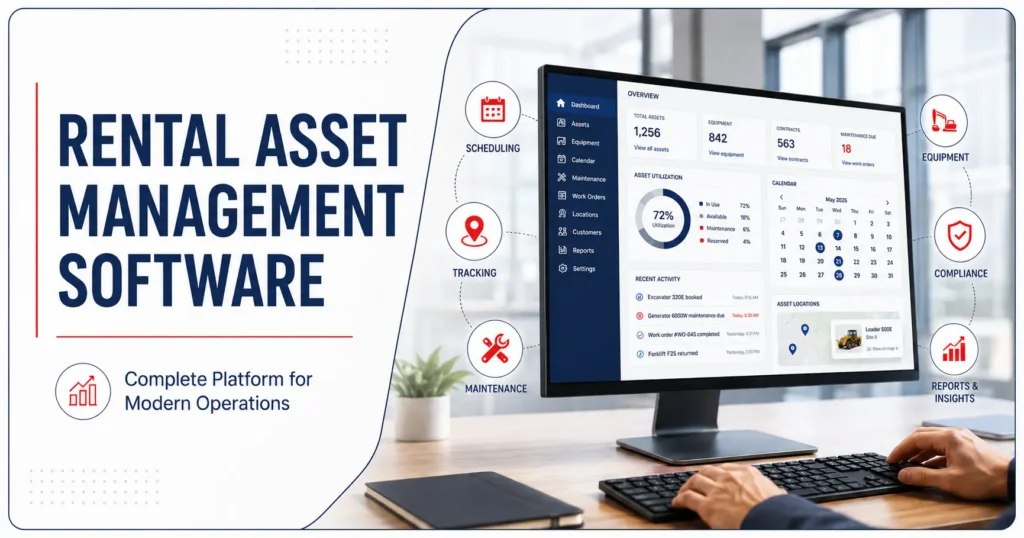
Rental asset management software serves as the operational backbone for businesses managing diverse equipment fleets, from construction machinery and event supplies to medical equipment and specialty tools. Modern platforms integrate asset tracking, maintenance scheduling, customer management, and business intelligence into unified systems that transform traditional rental operations into data-driven, efficient enterprises.
The complexity of contemporary rental operations demands sophisticated software solutions that handle multiple asset types, diverse customer requirements, complex pricing structures, and regulatory compliance while providing real-time visibility and predictive analytics. Successful rental businesses recognize that comprehensive asset management software is not just operational support but a competitive advantage that enables growth, profitability, and market differentiation.
Understanding the capabilities and selection criteria for rental asset management software helps businesses choose platforms that align with operational requirements, growth objectives, and technology strategies. This comprehensive analysis explores essential features, implementation considerations, and strategic benefits that define modern rental asset management solutions.
In this guide, you’ll learn how a rental asset management solution helps businesses improve asset visibility, optimize utilization, automate maintenance, streamline customer management, and gain real-time insights into rental performance.
Understanding Modern Rental Asset Management
Rental asset management encompasses the complete lifecycle of rental equipment from acquisition through disposal, including procurement planning, inventory management, utilization optimization, maintenance scheduling, customer service, and financial performance tracking. Modern software platforms automate and optimize these processes while providing intelligence for strategic decision-making.
Traditional rental operations relied heavily on manual processes, spreadsheet tracking, and reactive maintenance that often resulted in inefficiencies, errors, and missed opportunities. Contemporary rental management platform transforms these operations through automation, real-time data, and predictive analytics that enable proactive management and optimal resource utilization.
The evolution toward integrated platforms reflects the growing complexity of rental operations, customer expectations for transparency and service quality, regulatory requirements for tracking and reporting, and competitive pressures that demand operational excellence and cost optimization.
Core Platform Capabilities
Comprehensive Asset Tracking and Inventory Management
Modern rental management platform platforms provide granular tracking capabilities that accommodate diverse asset types, from serialized heavy equipment to bulk consumable supplies. This includes hierarchical asset organization with categories, subcategories, and individual specifications, real-time availability tracking across multiple locations, condition monitoring with inspection records and maintenance history, and utilization analytics that optimize deployment and pricing strategies.
Advanced tracking extends beyond basic inventory management to include asset genealogy for components and attachments, depreciation calculation for financial reporting, compliance tracking for regulatory requirements, and performance monitoring for optimization insights.
Integration with barcode, RFID, and IoT technologies automates data collection while reducing manual errors and improving operational efficiency. An asset management platform can demonstrate comprehensive tracking that accommodates complex rental operations across multiple business segments.
| Capability | Manual Management | Rental Asset Management Software |
| Asset Tracking | Spreadsheets | Real-time visibility |
| Reservations | Phone/email | Automated scheduling |
| Maintenance | Reactive | Preventive & predictive |
| Billing | Manual entry | Automated invoicing |
| Reporting | Static spreadsheets | Real-time dashboards |
| Customer Experience | Limited visibility | Self-service portals |
Intelligent Scheduling and Reservation Management
Scheduling functionality in rental asset management software must accommodate complex scenarios including multi-asset reservations, recurring rentals, maintenance windows, and transportation logistics. Advanced systems prevent double bookings through real-time availability checking, optimize asset allocation across customer requests, and provide flexible scheduling options that accommodate changing customer requirements.
Intelligent scheduling considers factors beyond basic availability including equipment location, transportation time, maintenance schedules, and customer preferences to optimize both customer satisfaction and operational efficiency. This capability becomes particularly important for large fleets where manual scheduling becomes unwieldy and error-prone.
Integration with customer portals and mobile applications enables self-service booking while maintaining operational control and availability accuracy. Automated confirmation and reminder systems reduce administrative overhead while improving customer communication.
Maintenance Management and Lifecycle Optimization
Effective maintenance management extends asset life, reduces operational costs, and improves customer satisfaction through reliable equipment performance. Modern platforms support multiple maintenance strategies including preventive scheduling based on time or usage intervals, predictive maintenance using diagnostic data and analytics, corrective maintenance with work order management, and compliance maintenance for regulatory requirements.
Maintenance optimization considers total cost of ownership, asset utilization patterns, and replacement economics to inform strategic decisions about fleet composition and individual asset retirement. Integration with parts inventory management ensures maintenance efficiency while minimizing carrying costs.
Mobile capabilities enable field service management with real-time work order updates, parts requirement communication, and completion documentation that streamlines maintenance workflows and improves service quality.
Advanced Analytics and Business Intelligence
Performance Analytics and KPIs
According to the American Rental Association (ARA), monitoring utilization, maintenance spending, and equipment availability is essential for understanding rental fleet performance and profitability.
Rental asset management platforms generate substantial operational data that becomes valuable business intelligence when properly analyzed. Key performance indicators include asset utilization rates, revenue per asset, maintenance cost ratios, customer satisfaction metrics, and profitability analysis by asset type, location, and customer segment.
Advanced analytics identify trends, patterns, and optimization opportunities that support strategic decision-making about fleet composition, pricing strategies, market expansion, and operational improvements. Historical data analysis enables forecasting and scenario planning that inform long-term business strategy.
Integration with business intelligence platforms like Power BI provides sophisticated reporting and visualization capabilities that make complex data accessible to management teams and support evidence-based decision-making.
Businesses that want deeper reporting capabilities often adopt business intelligence in equipment rentals to improve operational decision-making.
Predictive Analytics and Optimization
Machine learning algorithms applied to rental operations data can predict maintenance needs, forecast demand patterns, optimize pricing strategies, and identify customer churn risks. These capabilities enable proactive management that prevents problems rather than reacting to issues after they occur.
Predictive analytics become particularly valuable for large operations where pattern recognition and optimization exceed human analytical capabilities. Investment in analytics platforms pays dividends through improved operational efficiency, reduced costs, and enhanced customer satisfaction.
Customer Relationship and Service Management
Integrated CRM and Customer Portals
Modern rental operations require sophisticated customer relationship management that extends beyond basic contact information to include rental history, equipment preferences, project requirements, and service interactions. Integrated CRM capabilities enable personalized service, targeted marketing, and proactive customer support that build loyalty and drive revenue growth.
Customer portals provide self-service capabilities including equipment browsing, availability checking, reservation management, and account information access. These portals improve customer satisfaction while reducing administrative overhead for routine transactions.
Customer retention can also improve when supported by dedicated customer relationship management solutions.
Mobile applications extend customer service capabilities to field environments where customers need real-time access to equipment information, support services, and communication with rental company personnel.
Project and Contract Management
Many rental operations involve complex projects with multiple assets, extended timeframes, and detailed specifications. Advanced platforms support project-level management that coordinates multiple assets, tracks project profitability, manages contract compliance, and provides project-specific reporting and communication.
Contract management capabilities include template creation, terms management, automated renewal processing, and compliance tracking that ensure consistent service delivery while minimizing legal and financial risks.
Financial Management and Reporting
Revenue Recognition and Billing
Rental operations involve complex billing scenarios including daily rates, usage-based charges, damage assessments, transportation fees, and tax calculations across multiple jurisdictions. Modern platforms automate billing processes while accommodating diverse pricing structures and customer requirements.
Revenue recognition capabilities ensure compliance with accounting standards while providing accurate financial reporting for business analysis. Integration with accounting systems eliminates duplicate data entry while maintaining financial accuracy and audit trails.
Cost Management and Profitability Analysis
Understanding true asset profitability requires comprehensive cost tracking including acquisition costs, depreciation, maintenance expenses, insurance, storage, and administrative overhead. Advanced platforms allocate costs accurately while providing profitability analysis at asset, customer, and project levels.
Total cost of ownership analysis informs strategic decisions about asset replacement, fleet optimization, and pricing strategies that ensure long-term profitability and competitive positioning.
Technology Integration and Scalability
API Connectivity and System Integration
Modern rental operations utilize multiple software systems including accounting platforms, maintenance management systems, customer communication tools, and industry-specific applications. Rental asset management software must provide robust integration capabilities through APIs and standard data formats.
A software can offer extensive integration options with QuickBooks, Sage, Microsoft Business Central, and numerous other business systems that eliminate data silos and streamline operations.
Integration planning should consider both current needs and future requirements as business operations evolve and new technologies become available. Choose platforms with open architectures and strong developer ecosystems that support ongoing integration needs.
Cloud Infrastructure and Mobile Access
Cloud-based platforms provide scalability, reliability, and accessibility advantages over traditional on-premise solutions. Consider factors including data security, backup and recovery capabilities, performance and uptime guarantees, and integration with existing cloud services.
Mobile access becomes increasingly important as rental operations extend to field environments where personnel need real-time access to asset information, customer data, and operational tools. Ensure mobile applications provide full functionality with offline capabilities for areas with limited connectivity.
Implementation Strategy and Best Practices
Phased Implementation and Change Management
Successful software implementation requires careful planning, phased rollouts, and comprehensive change management that addresses both technical and organizational challenges. Consider starting with core functionality before adding advanced features to minimize complexity and accelerate user adoption.
Change management should address user training, workflow modifications, data migration, and performance measurement to ensure implementation success and realization of expected benefits.
Data Quality and Migration
Asset management software effectiveness depends heavily on data accuracy and completeness. Invest time in data cleaning, standardization, and validation before migration to ensure system effectiveness from implementation start.
Establish data governance processes that maintain quality over time including validation rules, regular audits, and user training that prevents data degradation and ensures ongoing system reliability.
Performance Monitoring and Optimization
Treat software implementation as an ongoing process rather than a one-time project. Regular performance monitoring, user feedback collection, and process optimization ensure the system continues to meet evolving business needs.
Establish key performance indicators that measure system effectiveness and business impact including user adoption rates, process efficiency improvements, error reduction, and business performance metrics that validate the investment.
Selection Criteria and Vendor Evaluation
Functional Requirements Assessment
Develop comprehensive requirements specifications that address current operational needs and future growth plans. Consider asset types and complexity, customer management requirements, financial and reporting needs, integration necessities, and regulatory compliance obligations.
Create evaluation criteria that weight requirements based on business importance while considering both immediate needs and strategic objectives for business growth and market expansion.
Vendor Assessment and Due Diligence
Evaluate software vendors based on industry experience, customer references, financial stability, support capabilities, and development roadmap commitment. Request demonstrations using your actual data and operational scenarios to assess system suitability and usability.
Consider implementation support, training programs, ongoing customer support, and the vendor’s commitment to product development and innovation that ensures long-term partnership value.
Total Cost of Ownership Analysis
Evaluate complete financial impact including software licensing, implementation services, training costs, integration expenses, ongoing support fees, and internal resource requirements. Consider both direct costs and opportunity costs from implementation effort and potential operational disruption.
Calculate expected return on investment based on operational efficiency improvements, cost reductions, revenue enhancements, and competitive advantages that justify the software investment and support business case development.
Future-Proofing and Strategic Considerations
Technology Evolution and Adaptation
The rental industry continues to evolve with new technologies including IoT sensors, artificial intelligence, blockchain, and augmented reality applications. Choose software platforms that demonstrate adaptability to new technologies and commitment to ongoing innovation.
Consider vendor development roadmaps, technology partnerships, and platform architecture flexibility that support adoption of emerging technologies as they become commercially viable and strategically important.
Market Expansion and Business Model Evolution
Rental businesses increasingly expand into new markets, asset categories, and service models that may require platform capabilities beyond current needs. Evaluate software scalability and flexibility to accommodate business growth and evolution.
Consider how platform capabilities support new business models including subscription services, outcome-based contracts, and service-enhanced rentals that may become important competitive differentiators.
Rental asset management software selection and implementation represent strategic investments that fundamentally impact operational efficiency, customer satisfaction, and business growth potential. Modern platforms provide comprehensive capabilities that transform rental operations through automation, analytics, and integration that enable competitive advantages and sustainable growth.
Success requires careful requirements analysis, thorough vendor evaluation, strategic implementation planning, and ongoing optimization that ensures software investment delivers expected business value and supports long-term operational excellence.
Future-Proofing and Strategic Considerations
Rental Asset Management Software Evaluation Checklist
Before choosing software, ensure it includes:
- Serialized asset tracking
- Preventive maintenance scheduling
- Mobile inspections
- Customer portal access
- Maintenance history tracking
- Multi-location inventory management
- Reporting and analytics
- Accounting integration
- API connectivity
- Utilization and profitability reporting
Conclusion
Rental asset management software has become a critical operational platform for modern rental businesses. From asset tracking and maintenance scheduling to reporting, customer management, and profitability analysis, the right solution helps organizations make faster and more informed decisions throughout the asset lifecycle.
As rental operations become more complex, businesses need systems that improve visibility, automate workflows, and support long-term growth.
Ready to gain better control of your rental assets?
Explore how we can help you improve utilization, reduce downtime, and manage rental operations more efficiently. book a free demo or reach out to the experts to know the complete details!
Frequently Asked Questions
What is the difference between rental management software and general asset management software?
Rental management software is specifically designed for rental operations with features like availability scheduling, customer reservations, rental billing, return processing, and rental-specific analytics. General asset management focuses on ownership tracking, maintenance, and lifecycle management without rental-specific workflow capabilities.
How long does it typically take to implement comprehensive rental asset management software?
Implementation timelines vary based on business size, data complexity, and integration requirements. Small operations might complete basic implementation in 4-8 weeks, while large businesses with complex workflows may require 3-6 months. Phased implementations starting with core functionality can provide value sooner while managing complexity.
What integration capabilities are most important for rental asset management platforms?
Critical integrations include accounting systems for financial management, payment processing for customer billing, maintenance management for service coordination, customer communication tools, and IoT platforms for automated data collection. API connectivity and standard data formats ensure flexible integration with existing and future systems.
How do rental asset management platforms handle different types of assets with varying complexities?
Modern platforms support hierarchical asset organization with customizable attributes, specifications, and tracking requirements for different asset types. Serialized equipment, bulk inventory, consumables, and accessories can coexist in unified systems with appropriate tracking and management capabilities for each category.
What are the key performance indicators that rental asset management software should track?
Essential KPIs include asset utilization rates, revenue per asset per day, maintenance cost percentages, customer retention rates, average rental duration, and profitability by asset type and customer segment. Advanced analytics should provide trending, forecasting, and comparative analysis that support strategic decision-making and operational optimization.


