
How Equipment Rental Scheduling Software Improves Your Daily Operations
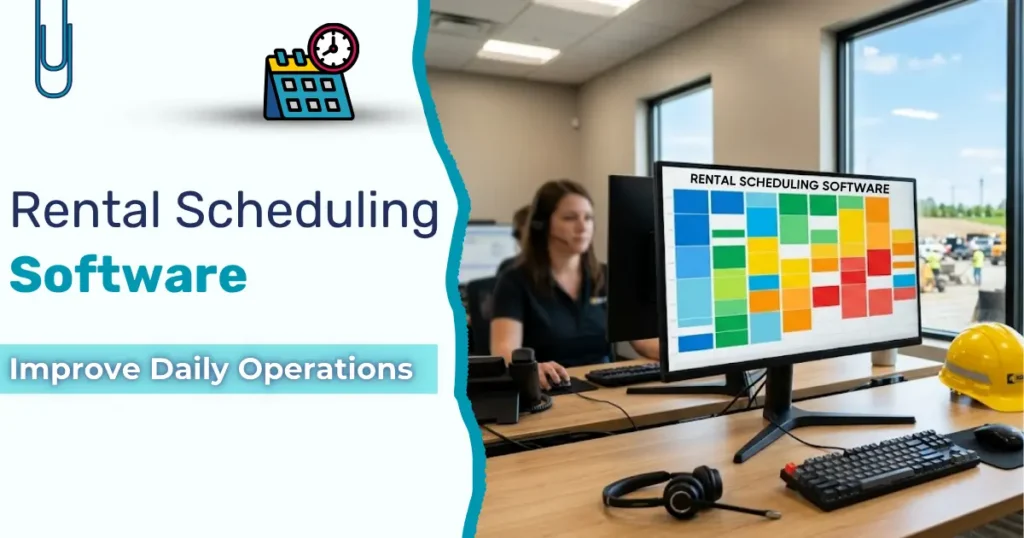
Running an equipment rental business requires a high level of organization. Simply owning great machinery and tools is not enough to guarantee success. You must actively manage asset availability, coordinate complex delivery logistics, and schedule regular maintenance tasks with exact precision. When your team relies on whiteboards, paper calendars, or basic spreadsheets, important details easily get lost in the shuffle.
Managing rentals involves tracking a piece of equipment from the very moment a customer books it until the moment it is safely returned and inspected. To do this effectively, businesses need a centralized system. This is where equipment rental scheduling software becomes highly valuable. It provides a real-time overview of your entire operation, helping you minimize manual errors, reduce costly downtime, and improve coordination across all your departments.
In this guide, we will explore the core features of modern scheduling platforms and how they help you stay in complete control of your rental business.
The Challenges of Manual Rental Scheduling
Before diving into the solution, it helps to understand why manual scheduling causes so many problems. In a busy rental yard, situations change by the minute. A customer might call to extend their rental by three days. A delivery truck might get stuck in traffic. A piece of heavy machinery might return from a job site with unexpected damage that requires immediate repair.
When you track these events manually, the information moves slowly. The person answering the phones might not know that a specific loader is broken. As a result, they might promise that loader to a new customer for the following morning. This leads to double bookings, angry customers, and a lot of stress for your staff.
Without a digital calendar, managers also struggle to plan their weeks. They cannot easily see how many drivers they need for Tuesday or how many mechanics need to be in the shop on Thursday. This lack of visibility leads to poor resource planning and wasted money.
What is Equipment Rental Scheduling Software?
Equipment rental scheduling software is a dedicated digital platform of rental management software designed specifically for the rental industry. It goes far beyond simply listing what items you own. Instead, it acts as a central command center for your daily activities.
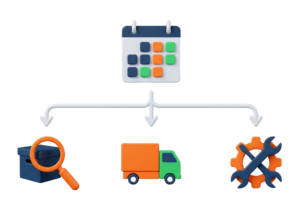
A strong system, like the one offered by PREXA365, focuses on three main areas:
- Tracking the exact availability of your physical assets
- Managing the transport and delivery of those assets
- Scheduling the maintenance and servicing required to keep those assets running
By combining these three elements into a single visual calendar, the software ensures that your sales team, your delivery drivers, and your repair technicians are always looking at the exact same information.
Core Feature 1: Asset Availability Tracking
The foundation of any rental operation is knowing exactly what you have available to rent. An asset availability tracker gives you real time insights into your current inventory and your future reservations. This tool is perfect for rental planners, sales teams, and inventory managers who need to avoid double bookings and optimize their daily tasks.
When you use a digital availability tracker, you gain several distinct advantages.
Instant Visibility
You no longer have to walk out to the yard to see if a piece of equipment is there. The software provides a clear picture of asset availability instantly. You know exactly what is sitting in the warehouse, what is currently out on a job site, and what is sitting in the repair queue.
Visual Booking Calendars
Reading through lists of dates can be confusing. Good equipment rental scheduling software displays ongoing and upcoming reservations in a simple calendar format. You can look at a specific week and see colorful blocks of time representing exactly when an item is booked, when it needs to be prepped, and when it is scheduled to return.
Easy Searching and Filtering
When a customer calls asking for a specific type of tool, your sales team needs to find it fast. A digital system allows your staff to search and filter your inventory with ease. They can filter searches by asset type, category, subcategory, and specific date ranges to give the customer an immediate answer.
Handling Different Inventory Styles
Rental businesses usually carry two types of inventory. Serialized assets are high value items, like large excavators, that require individual tracking. Non-serialized assets are bulk items, like scaffolding poles or traffic cones, where you only need to track the total quantity. A robust scheduling system adapts to both styles, allowing you to manage your entire catalog in one place.
Core Feature 2: Transport Ticket Scheduling
Getting the equipment to the customer on time is just as important as having the equipment available. Transport logistics can easily become chaotic if they are not managed properly. A transport ticket scheduler helps you monitor all the moving parts for each rental job, ensuring quick dispatch and reliable pickups.
A dedicated transport module allows you to organize your logistics smoothly through several key functions.
Assigning Tickets to Drivers
Every rental job that requires delivery or pickup generates a transport ticket. You can assign these tickets directly to a specific driver. The driver knows exactly where to go, what equipment to load, and what time the customer expects them to arrive.
Managing Outsourced Logistics
Not every rental company owns a massive fleet of delivery trucks. Often, you might need to hire an outside logistics company to move heavy machinery. The software allows you to toggle between your in house drivers and your outsourced transport partners. You can assign tickets to third party companies and still track the progress within your own system.
Monitoring Status Updates
A calendar based view of transport activity lets dispatchers see the status of every truck. You can filter tickets by their current status, such as New, Scheduled, Picked Up, On Route, Completed, or Cancelled. If a customer calls asking where their delivery is, your team can look at the software and give them an accurate update immediately.
Core Feature 3: Service Job Scheduling
Equipment wears down and requires regular maintenance. If you do not schedule this maintenance properly, machines break down on customer job sites. A service job scheduler helps you assign repair and inspection tasks to the right technicians on the exact right day.
When a piece of equipment returns from a rental, it rarely goes straight back to the ready line. It usually requires cleaning, a safety inspection, or routine servicing.
Planning Daily Technician Activity
The service module provides a calendar view for day by day activity planning. Service managers can look at the week ahead and see exactly how many machines need inspections. They can assign specific repair jobs to specific mechanics based on their skills.
Monitoring Progress
Managers have full visibility to monitor the progress of every repair. If a mechanic finds a major problem that will take three days to fix, the manager can update the system. The software will then alert the sales team that this specific machine is not available for rent, preventing them from accidentally booking a broken piece of equipment.
Core Feature 4: Grouping Service Tasks Easily
Sometimes, a rental involves multiple assets and requires highly coordinated service efforts. For example, setting up a large temporary power grid for a festival requires delivering multiple generators, running hundreds of feet of cable, and having technicians on site for setup and testing.
A service order scheduler enables you to group related service jobs under one unified service order. This greatly simplifies task management for large projects.
Instead of tracking ten different tickets for one event, you can combine multiple service jobs easily. You can track all the related servicing activity within one main order file. The visual layout helps managers plan the job from start to finish, ensuring that no step is forgotten and that the customer receives exactly what they paid for.
Planning Efficient Rental Operations
Whether you are managing massive heavy duty rental assets or coordinating high volume logistics for smaller tools, equipment rental scheduling software becomes the absolute command center for your business.
By moving away from paper and adopting a visual, calendar-based system, you actively reduce the number of manual errors your team makes. Clear filter-based controls mean your staff always knows exactly what equipment is available. Organized servicing with job specific assignments means your machines stay in top working conditions.
Managing rentals does not have to be a complicated, stressful process. By utilizing digital scheduling tools, you simplify the way you track what is booked. You dispatch your delivery trucks faster, and you service your machinery better. Ultimately, this level of organization leads to happier customers, less frustrated employees, and a much healthier bottom line for your business.


