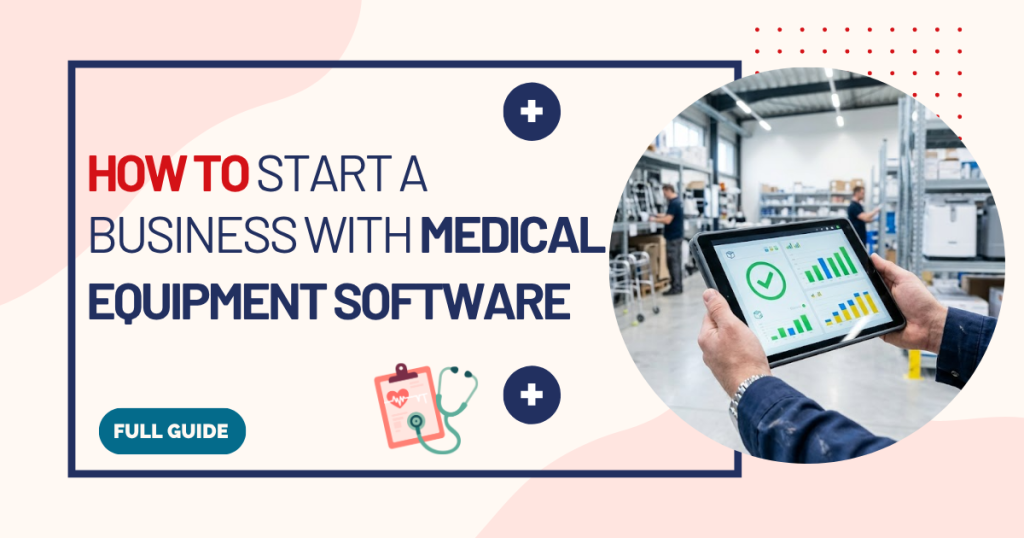
Starting a medical equipment rental business requires more than selecting inventory and setting rental prices.
Medical devices may be subject to product, licensing, prescription, advertising, servicing, cleaning, privacy, documentation, recall, delivery, and record-retention requirements. The applicable requirements depend on the equipment, customer, service model, and jurisdiction.
A suitable medical equipment rental software system may support the operational side of the business by connecting device records, bookings, delivery schedules, service history, returns, and availability.
However, software does not determine whether a device may legally be rented, whether it is clinically suitable, or which preparation and servicing procedures must be followed.
This article provides general business-planning information. It is not medical, legal, regulatory, insurance, infection-control, or tax advice. Consult qualified professionals, device manufacturers, insurers, and the relevant authorities before purchasing or renting any medical device.
Define a Narrow Initial Scope
Begin with a clearly documented business model.
Identify the customers the business intends to serve, geographic service area, equipment categories, rental duration, delivery and collection process, storage capability, technical support, employee competencies, and available capital.
A narrow scope makes it easier to establish controlled procedures, train employees, and understand the requirements attached to each device category.
Do not add medical equipment simply because online searches suggest strong demand. Confirm whether the business can legally purchase, store, advertise, deliver, install, instruct on, maintain, clean, and rent each proposed device.
The company should also decide whether it will rent directly to individuals, work with healthcare organizations, support business customers, or use another approved model. Each arrangement may create different contractual, privacy, billing, and regulatory considerations.
Build Complete Device Records
Every individually controlled medical device needs a reliable identity.
The record may include:
- Rental status
- Service status
- Recall status
- Supporting documents
A Medical Rental Equipment Software process should preserve the relationship between the device, customer, booking, delivery, collection, preparation record, service history, and required documentation.
The same identifier should be used consistently across booking, service, transport, customer, and financial records.
If one department records a device by serial number while another uses an informal description, employees may struggle to connect its complete history.
Track Lots, Components, and Accessories
Some medical devices operate with accessories, components, or consumables that may need separate records.
The required tracking method depends on the item and applicable controls.
An individually tracked device may be rented with quantity-based accessories. The booking should preserve the complete package without hiding its components.
If one component is missing, recalled, damaged, expired, or under review, the primary device may become unavailable.
A durable medical equipment rental software process should allow teams to review the device and its supporting items before confirming a booking.
Package records should also support partial returns and replacements. If a customer returns one component while retaining the primary device, the system should update only the relevant item.
Establish Recall Monitoring
Device identity must support recall and correction reviews.
The business should define who monitors communications from regulators, manufacturers, suppliers, and other authorized sources.
The U.S. FDA medical-device recall database contains recalls classified since November 2002. Since January 2017, the database may also include certain correction or removal actions initiated by a firm before FDA review. These dates apply to the U.S. FDA database and do not replace monitoring required in other jurisdictions.
Recall records may need to identify:
- Customer assignment
- Device status
- Notification activity
- Required correction or removal
- Closure evidence
Software can help locate potentially affected records. It cannot determine the clinical, legal, or regulatory response.
Follow the instructions issued by the manufacturer, regulator, and qualified professionals.
Keep Booking Separate from Eligibility
An available device is not necessarily suitable or legally eligible for every customer.
The booking process may require professional authorization, prescription information, customer eligibility, insurance verification, delivery review, an agreement, or other documentation.
Do not use medical equipment booking software to make clinical decisions.
The system may record whether required information has been received and reviewed by an authorized person. It should not independently decide whether a customer needs a particular device.
Avoid collecting unnecessary medical information. Request only the information required and legally permitted for the rental process.
See how PREXA365 helps rental businesses grow
Manage Service and Calibration
Service may be triggered by a date, device use, condition, test result, reported fault, calibration schedule, recall, or manufacturer instruction.
A medical equipment service scheduling software process can maintain due dates and service histories when configured according to controlled requirements.
Service records may include:
- Completion date
- Next due point
- Approval status
Only qualified or authorized personnel should perform technical work where required.
A technician completing a repair should not automatically make the device available if further verification, preparation, or approval remains necessary.
Plan Deliveries and Collections
Delivery may involve more than recording an address and date.
The process may need to consider the device, customer information, access, transport conditions, delivery window, responsible employee, accessories, documentation, installation, handover, and confirmation.
Some equipment may have specific requirements involving temperature, humidity, battery condition, movement, positioning, packaging, or power.
Follow device-specific and jurisdiction-specific guidance.
The medical equipment scheduling software should support operational planning. It should not determine when a patient needs equipment or make another clinical scheduling decision.
Collection also requires control.
A returned device may need to remain separated from prepared or available inventory until intake procedures are complete.
Review Contracts and Insurance
Rental agreements may address device identity, rental duration, authorized use, delivery, collection, loss, damage, service, customer responsibilities, and return requirements.
Contract language requires jurisdiction-specific legal review.
The business should also discuss relevant coverage with licensed insurance advisers. Depending on the operation, topics may include general liability, product liability, professional liability where relevant, commercial property, transit, vehicles, cyber risk, and equipment breakdown.
Do not assume that a customer waiver transfers every responsibility or that a standard rental policy covers all medical equipment.
A medical device lease management software process may preserve contracts, dates, devices, payments, and supporting documents. It does not establish whether the underlying terms are legally sufficient.
Control Returns, Extensions, and Replacements
Medical equipment rentals do not always end exactly as planned.
A customer may request an extension, return only part of a package, report a fault, move address, or require a replacement device.
The system should preserve the history of both original and replacement equipment.
Do not overwrite the first serial number when another device is supplied.
A partial return should close only the returned items. The remaining device or accessories should continue under the approved contract.
Each exception may also affect delivery, servicing, billing, availability, documentation, and recall records.
The medical equipment rental software should preserve those relationships without making clinical or regulatory decisions.
Test the Full Device Journey
Before offering a medical device for rental, test the entire process:
- Purchase and receiving
- Device and component record creation
- Recall check
- Customer enquiry
- Required-document review
- Booking
- Preparation
- Delivery and handover
- Active rental
- Extension or replacement
- Collection
- Intake and quarantine
- Preparation and servicing
- Approval for another rental
Add an exception during the test.
For example, introduce a recall notice, failed service check, missing component, privacy concern, incorrect serial number, incomplete return, or delivery change.
Review who controls each decision and status.
A durable medical equipment rental software process should preserve the audit history without replacing professional, technical, regulatory, or clinical judgement.
Conclusion
Starting a medical equipment rental business requires controlled records, device-specific procedures, qualified professional input, recall monitoring, privacy protection, service histories, and clear employee responsibilities.
Begin with a narrow and verified scope.
Confirm the legal, clinical, technical, insurance, preparation, and regulatory requirements for every device category before offering it for rental.
Medical equipment rental software can support booking, inventory, scheduling, service, delivery, returns, documents, and reporting. It cannot determine legal eligibility, clinical suitability, preparation procedures, or regulatory compliance.
Ready to assess PREXA365 against an approved medical-equipment rental workflow? Book a free demo or email sales@prexa365.com to discuss device records, bookings, recall histories, service schedules, delivery, returns, and reporting requirements.