
The Ultimate Guide to Rental Inventory Management for Equipment Rental Businesses
Managing your rental inventory effectively goes beyond simply counting the items in your warehouse. It requires making smart decisions that keep your gear organized, well-maintained, and ready for your customers. Whether your business rents heavy construction machinery, camera gear, or party supplies, proper rental inventory management software makes the difference between thriving and merely surviving.
Getting started with equipment tracking systems
To begin organizing your rental assets, you must first determine the best tracking method for your specific items. Some pieces of equipment require individual tracking, while others work better when tracked in bulk. For instance, a camera rental business needs to track each specific camera body and lens separately using unique identifiers and maintenance records. However, tracking total quantities through bulk management makes more sense for smaller accessories like cables or memory cards.
PREXA365 offers distinct tracking methods to handle different types of rental items. The trackable inventory system lets you assign unique identifiers to high-value items, making it easy to monitor their specific history and availability. For lower-value items that do not require individual tracking, the bulk inventory control simplifies the process by focusing on total quantities rather than specific pieces.
Product information in your rental inventory
Effective rental inventory management starts with detailed product information. Providing multiple ways to organize and present your product listings makes them easier to manage internally and more appealing to your customers.
According to Wikipedia’s overview of Product Information Management, PIM is the process of managing the information required to market and sell products through different distribution channels. It also allows product information to be maintained centrally and reused across websites, catalogues, marketplaces, and other customer-facing platforms.
Providing multiple ways to categorize, organize, and display rental products makes inventory easier to manage internally. It also helps customers understand the available equipment, compare options, and select the right product for their requirements.
SKU management for better organization
Every product in your rental inventory needs a unique identifier, known as a Stock Keeping Unit (SKU). While systems can automatically generate SKUs based on product names, you can customize them to match your organizational system. For example, a heavy equipment rental business might use SKUs like “EXC-CAT-320” for a specific excavator. This structured approach makes searching and sorting your inventory much faster.
Product photos
Clear product photos help both your staff and customers understand exactly what they are working with. You should add multiple photos for each product, showing different angles or use cases. While some systems suggest relevant images based on the product name, it is always better to use your own photos to show the actual condition of the items customers will receive.
Managing product variations
Many rental items come in different sizes, colors, or configurations. Instead of creating separate products for each version, a variation system lets you manage them under a single product listing. Each variation can have its own pricing and availability tracking while maintaining the organization of a single product grouping.
Creating product bundles
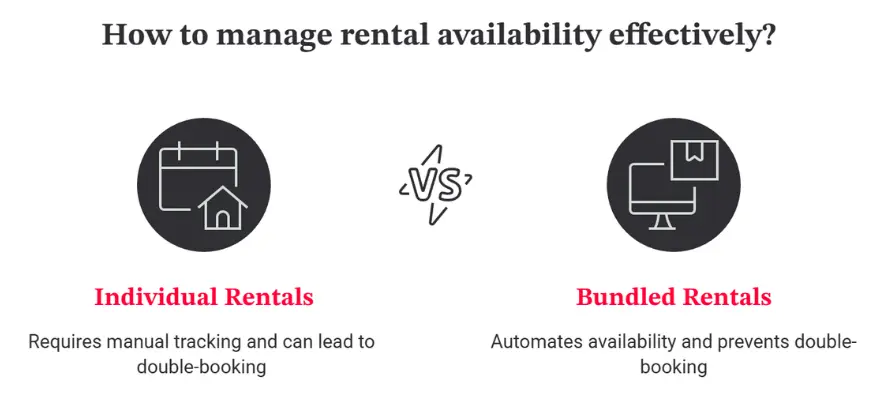
Bundles simplify the rental process by grouping commonly rented items together. A party rental company might create a “Wedding Tent Package,” which includes a canopy tent, specific lighting, a set number of tables, and matching chairs. A bundle feature automatically manages the availability of all included items, preventing double-booking of equipment that is part of multiple bundles.
Real-time inventory tracking and historical data
Modern systems provide real-time insights into equipment availability and usage patterns. A clear calendar view shows exactly when items are available, reserved, or scheduled for maintenance. This prevents double bookings and helps you plan effective inventory strategies.
For instance, a seasonal business that manages both summer and winter equipment rentals uses a calendar view to show exactly when items are available or scheduled for repair. This helps staff plan ahead and ensures clients are never promised equipment that is already spoken for.
Equipment lifecycle management
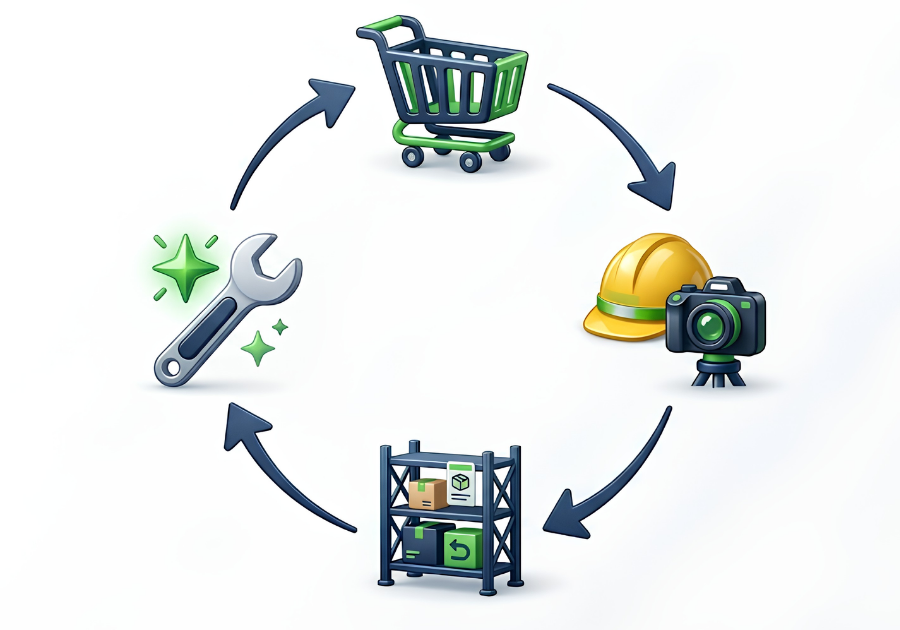
Every piece of rental equipment has a lifecycle. Understanding this helps you maintain quality while maximizing your return on investment. The buffer time feature in a robust equipment rental software lets you block out time before and after rentals for maintenance and preparation, ensuring your gear stays in top condition without affecting scheduling.
Using buffer time between rentals prevents last-minute unexpected challenges. When the technical team has enough time to perform basic maintenance, the item stays in top condition for the next rental, maintaining customer satisfaction and reducing the risk of equipment failure in the field.
Additionally, keeping detailed notes regarding repairs and replacements helps you make informed decisions about when to retire or replace items, ensuring your rental inventory remains safe and reliable.
Organization and categorization
Keeping your rental inventory organized is crucial for daily operations. A tagging system lets you categorize products for easy searching and filtering. You can create tags for equipment types, storage locations, or assign products to specific categories. It is easy to find items quickly when combined with barcodes, which is especially useful when training new staff or managing an extensive equipment catalog.
An audiovisual equipment rental system demonstrates this perfectly. Categorizing their extensive cameras, cables, and lighting equipment involves mounting single barcodes on storage room walls for bulk items, allowing quick scanning of multiple identical items during checkout and return.
Inventory control and pricing strategies
Smart rental inventory management connects directly to pricing strategy. A structured pricing feature lets you create tiered pricing based on rental duration, encouraging longer rentals when appropriate. You can also set different rates for peak seasons or special events, helping maximize revenue based on demand.
Having flexible inventory control systems is crucial for businesses facing unexpected challenges. When weather events or unexpected circumstances force cancellations, a reliable system allows you to manage those changes and issue credits for future bookings efficiently, maintaining customer relationships during disruptions.
Prevent common inventory management problems
Most rental businesses face similar inventory control challenges. Here is how a dedicated system helps prevent common issues:
- Double booking: Real-time inventory availability calendars ensure you never double-book items. You can instantly see what is available for the requested dates when creating new orders.
- Lost equipment: Barcode scanning features let you quickly check items in and out, maintaining accurate tracking. Mobile apps make this process even faster, allowing staff to scan items anywhere in the warehouse.
- Usage history: Detailed product usage history helps you understand which items are most popular and when they are in demand. This data helps you make informed decisions about inventory investments and pricing strategies.
Data-driven inventory management decisions
Detailed reporting features provide crucial metrics for inventory decisions:
- Equipment utilization rate: Track how often each item gets rented.
- Revenue per item: See which pieces generate the most income.
- Historical trends: Understand seasonal patterns and long-term performance.
- Stock levels: Monitor availability and plan purchases.
These insights help you make informed decisions about purchasing new equipment, retiring underperforming items, or adjusting your rental inventory mix to meet customer demand.
Scaling equipment rental management
As your rental business grows, your software needs to support that growth. A solid platform supports multiple locations, allowing you to track rental inventory across different sites while maintaining central control. If you are clear with the challenges and solutions of scaling a rental business, you can set up different warehouses, track equipment at different locations, and maintain accurate stock levels everywhere you operate.
System user permissions let you control what different staff members can access, making it easier to delegate inventory management responsibilities while maintaining oversight of your operations. This becomes especially important as you add new team members and locations.
Most important takeaways
- Getting started with equipment tracking systems: The first step is deciding which tracking method is best for your equipment. Some items need individual tracking, while others work better tracked in bulk.
- Product information in your rental inventory: Effective rental inventory management starts with detailed product information. Use SKUs, clear photos, and variations to organize your listings.
- Real-time tracking and historical data: Modern management systems provide real-time insights into equipment availability and usage patterns. A calendar view shows exactly when items are available, reserved, or scheduled for maintenance.
- Equipment lifecycle management: Tracking the lifecycle of your rental equipment is crucial for maintaining the quality of your inventory. Buffer time features help you manage maintenance and repair.
- Organization and categorization: Organizing your rental inventory is essential for efficient management. A category system lets you group products together and filter your inventory by category.
Conclusion
Effective rental inventory management gives you better control over equipment availability, maintenance, pricing, and utilization. With the right rental inventory management software, you can prevent double bookings, reduce equipment loss, improve asset performance, and make smarter purchasing decisions as your business grows.
A connected rental management platform brings inventory tracking, maintenance, reservations, billing, and reporting into one system, helping your team replace manual processes with real-time visibility and better operational control.
Ready to simplify your rental inventory management? Schedule a free demo or call us at +1 (905) 917-0365 to get started.
Frequently asked questions
What is rental inventory management?
Rental inventory management is the process of tracking, organizing, and maintaining the equipment your business rents out to customers. It involves monitoring item availability, scheduling routine maintenance, setting pricing rules, and analyzing usage data to make sure your operations run efficiently.
How do I prevent double-booking of my rental equipment?
The most effective way to prevent double bookings is by using real-time inventory tracking software like Prexa365. A centralized system provides a live calendar view of your equipment availability, so your staff knows exactly what is in stock, reserved, or out for repair before confirming a new customer order.
What is the difference between bulk and individual inventory tracking?
Individual tracking assigns a unique serial number or barcode to high-value items (like heavy construction machinery or expensive camera bodies) so you can monitor their specific history and condition. Bulk tracking groups lower-value, identical items (like cables, scaffolding poles, or folding chairs) by total quantity, making it faster to process large orders without scanning every single piece.
How can I manage the maintenance of my rental gear without disrupting reservations?
You can easily manage maintenance by using the buffer time feature in your rental software. This automatically blocks out a designated time before or after a rental is completed. This gives your technical team the necessary time to inspect, clean, and repair items, ensuring your equipment stays in safe, working conditions for the next customer.
Can rental inventory software help me handle seasonal pricing changes?
Yes. Dedicated rental inventory management systems connect your asset tracking directly to your pricing strategy. You can easily set up tiered pricing based on the length of the rental, create product bundles, or adjust your rates for peak seasons to maximize your revenue based on current demand.


