
How to Get Real-Time Equipment Usage Data Integrated into Your Rental Platform
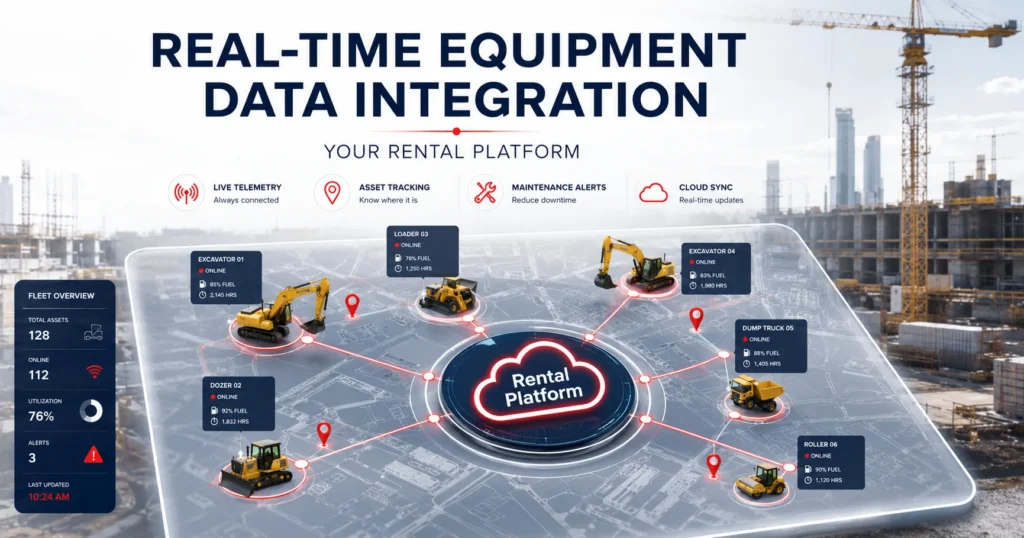
Real-time rental integration transforms rental operations from reactive to proactive, enabling precise utilization tracking, predictive maintenance scheduling, and data-driven business decisions. For rental businesses managing fleets of construction equipment, industrial machinery, or specialized tools, access to live operational data represents a competitive advantage that directly impacts profitability and customer satisfaction.
Rental businesses often struggle with limited visibility into how equipment is being used once it is deployed to customer sites. Without real-time data, maintenance schedules, utilization reporting, and operational planning often rely on manual processes and estimates.
This guide explains how rental companies can collect, integrate, and use equipment usage data to support maintenance planning, utilization tracking, reporting, and operational decision-making.
- Modern rental platforms provide unprecedented visibility into equipment performance
- Helps operators optimize fleet utilization, prevent costly breakdowns, and deliver superior customer service.
- It connects various data sources, implementing monitoring technologies, and establishing automated workflows
- Turns raw equipment data into actionable business intelligence.
Understanding Real-Time Equipment Usage Data
Real-time equipment usage data encompasses multiple metrics collected continuously from rental equipment during operation. This includes operating hours, engine runtime, fuel consumption, GPS location, operating temperatures, hydraulic pressures, and diagnostic fault codes. Advanced monitoring systems also capture operator behavior data, idle time percentages, and productivity metrics.
The value of real-time data lies not just in monitoring current conditions but in enabling predictive analytics and automated decision-making. When integrated properly with rental management platform, this data stream enables automatic billing based on actual usage, proactive maintenance scheduling, theft prevention through geofencing, and optimization of equipment deployment across job sites.
When combined with rental reporting and analytics tools, equipment usage data can help rental businesses identify underutilized assets, evaluate maintenance costs, and make fleet planning decisions based on actual equipment performance rather than assumptions.
Understanding different types of usage data helps rental companies prioritize integration efforts. Critical operational data includes engine hours, fuel levels, and location tracking for fleet management. Performance data covers productivity metrics, operator efficiency, and equipment utilization rates. Diagnostic data encompasses fault codes, component health indicators, and predictive failure warnings.
Data Source Identification and Integration Methods
Equipment Telematics Systems
Most modern equipment manufacturers offer factory-installed telematics systems that provide comprehensive operational data. These systems typically include GPS tracking, engine monitoring, hydraulic system diagnostics, and communication capabilities. Popular systems include Caterpillar’s Product Link, John Deere’s JDLink, and Komatsu’s KOMTRAX.
Integration with manufacturer telematics requires API access and data formatting compatibility with your rental platform. Many systems provide RESTful APIs that allow real-time data pulling, while others offer webhook-based push notifications for critical events. Robust integration capabilities support various manufacturer protocols and consolidate data from multiple telematics systems into unified dashboards.
Aftermarket IoT Solutions
For older equipment or specialized applications, aftermarket IoT devices provide cost-effective monitoring solutions. These devices can monitor engine parameters, track location, measure operating hours, and detect maintenance needs through various sensors and diagnostic port connections.
- Universal OBD-II readers for engine diagnostics
- GPS trackers with cellular connectivity for location monitoring
- Vibration sensors that support predictive maintenance activities
- Custom sensor packages for specialized monitoring requirements
The main advantage of these solutions is their ability to retrofit existing equipment fleets that do not have factory-installed telematics.
Mobile and Portable Monitoring Solutions
Portable monitoring solutions offer flexibility for specialized equipment or temporary deployments. These include smartphone apps that connect to equipment via Bluetooth, tablet-based inspection systems, and removable sensor packages that can transfer between different assets.
Mobile solutions work particularly well for smaller equipment, tools, and assets that move frequently between job sites. They provide basic monitoring capabilities while maintaining cost-effectiveness for diverse rental fleets.
Technical Integration Architecture
API-Based Data Integration
Application Programming Interfaces (APIs) provide the most common method for integrating real-time equipment data with rental platforms. RESTful APIs allow your rental management system to request current equipment status, historical usage data, and diagnostic information on demand or through scheduled updates.
Modern APIs support both pull and push methodologies. Pull-based integration involves your rental system actively requesting data at regular intervals, while push-based integration receives automatic notifications when equipment status changes or thresholds are exceeded. The choice depends on data urgency requirements and system architecture.
When implementing API integration, consider data authentication, rate limiting, error handling, and data format consistency. Most equipment manufacturers provide comprehensive API documentation, including sample code and testing environments.
Webhook and Event-Driven Integration
Webhooks enable real-time event notifications from equipment monitoring systems to your rental platform. This approach minimizes data latency and reduces system overhead by only transmitting data when significant events occur, such as equipment starting, stopping, or generating fault codes.
Event-driven integration works particularly well for critical alerts, maintenance notifications, and security events. Configure webhooks to trigger automated workflows in your rental system, such as updating asset status, generating service tickets, or notifying field personnel of equipment issues.
Data Streaming and Message Queue Systems
For high-volume data integration from large fleets, streaming solutions and message queue systems provide scalable, reliable data processing. These systems handle continuous data flows, ensure delivery reliability, and provide buffering during network interruptions.
Technologies like Apache Kafka, Amazon Kinesis, or Azure Service Bus can manage thousands of simultaneous equipment data streams while maintaining real-time performance. This approach suits large rental operations with hundreds or thousands of monitored assets.
Implementation Strategy and Best Practices
Phased Integration Approach
Implement real-time data integration in phases to manage complexity and minimize operational disruption. Start with critical equipment categories or high-value assets, then expand to additional fleet segments based on lessons learned and demonstrated value.
Phase one typically focuses on location tracking and basic operational status for your most valuable or frequently rented equipment. This provides immediate benefits for theft prevention, utilization tracking, and customer service improvement while establishing integration processes and user adoption.
Subsequent phases can add more sophisticated monitoring capabilities, predictive analytics, and automated business processes based on operational experience and user feedback.
Data Quality and Validation
Establish data quality standards and validation processes to ensure integration reliability. Real-time equipment data can include transmission errors, sensor malfunctions, and communication interruptions that require handling and correction.
Implement data validation rules that check for reasonable values, detect sensor failures, and flag inconsistent readings. Create fallback procedures for handling missing data and establish data retention policies for historical analysis and compliance requirements.
Security and Privacy Considerations
Equipment data integration involves sensitive operational information that requires proper security measures. Implement encrypted data transmission, secure API authentication, and access controls that limit data visibility to authorized personnel.
Consider privacy implications for customer data, especially when tracking equipment on customer job sites. Establish clear policies regarding data collection, usage, and sharing that comply with relevant regulations and customer agreements.
Alert Configuration and Automated Workflows
Critical Event Monitoring
Configure real-time alerts for critical equipment events that require immediate attention. These include engine fault codes, overheating conditions, unauthorized movement, and security breaches. Alerts should route to appropriate personnel based on severity and location.
Implement escalation procedures for unacknowledged alerts and establish clear response protocols for different event types. Critical alerts might trigger automatic service dispatch, while lower-priority notifications could generate maintenance tickets for future scheduling.
Predictive Maintenance Integration
Use real-time usage data to drive predictive maintenance workflows that prevent equipment failures and extend asset life. Monitor operating hours, engine parameters, hydraulic pressures, and other indicators that correlate with maintenance needs.
Preventive maintenance software integrates with real-time data sources to automatically schedule preventive maintenance based on actual usage rather than calendar intervals. This approach optimizes maintenance timing while reducing unexpected breakdowns.
Utilization Optimization
Leverage usage data to optimize equipment deployment and fleet sizing decisions. Track which assets have high utilization rates versus those that sit idle, identify geographic demand patterns, and adjust inventory allocation accordingly.
Real-time utilization data enables dynamic pricing strategies, equipment redeployment recommendations, and informed decisions about fleet expansion or reduction based on actual demand patterns.
Business Intelligence and Analytics Integration
The increasing use of connected equipment reflects a broader industry trend. According to the Association of Equipment Manufacturers (AEM), connected machine technologies and telematics continue to play a growing role in equipment monitoring, maintenance planning, and fleet visibility across construction and industrial sectors.
Dashboard and Reporting Systems
Transform raw equipment data into actionable insights through integrated dashboard and reporting systems. Create role-specific views that highlight relevant metrics for different users, from field technicians monitoring individual assets to executives tracking fleet-wide performance.
Effective dashboards combine real-time status indicators with historical trends, comparative analysis, and predictive insights. Key performance indicators might include fleet utilization rates, average revenue per asset, maintenance cost trends, and customer satisfaction metrics.
Performance Analytics and KPIs
Establish key performance indicators that leverage real-time equipment data to measure business success. Important metrics include equipment uptime percentages, utilization rates, maintenance cost per operating hour, and revenue optimization opportunities.
Track equipment performance against industry benchmarks and internal targets to identify improvement opportunities. Use historical data to establish baseline performance and measure the impact of operational changes over time.
Predictive Analytics and Machine Learning
Advanced analytics platforms can process real-time equipment data to identify patterns, predict failures, and recommend optimization strategies. Machine learning algorithms analyze historical patterns to forecast maintenance needs, predict equipment life cycles, and optimize scheduling decisions.
These capabilities require substantial data history and sophisticated analytics tools but can provide significant competitive advantages through improved operational efficiency and reduced downtime.
Capabilities:
- Requires a substantial history of equipment usage data
- Relies on advanced analytics and machine learning models
- Supports more informed maintenance and fleet planning decisions
- Can reduce downtime and improve operational efficiency
Cost-Benefit Analysis and ROI Measurement
Implementation Costs
| Cost Area | Example Investment |
| Hardware | GPS Devices, IoT Sensors |
| Software | Rental Platform Integration |
| Connectivity | Data & Communication Services |
| Training | Staff Enablement |
| Support | Ongoing Monitoring & Maintenance |
Conclusion
As telematics, IoT devices, and connected equipment continue to become more common across the rental industry, businesses that can capture and use operational data effectively will be in a stronger position to improve efficiency, control costs, and deliver a better customer experience.
Looking to connect equipment data with your rental operations? Explore how Rental Management, Asset Management, Preventive Maintenance, and Rental Reporting work together within PREXA365 to help manage equipment, maintenance, utilization, and reporting from a single platform. You can also request a free demo or email our team at sales@prexa365.com to learn how PREXA365 can help improve asset utilization, maintenance planning, and rental operations.
Frequently Asked Questions
What types of equipment data are most valuable for rental business operations?
The most valuable data typically includes location tracking for fleet management, operating hours for accurate billing and maintenance scheduling, engine diagnostics for predictive maintenance, and utilization rates for fleet optimization. Fuel consumption, operator behavior, and productivity metrics provide additional value for advanced analytics and customer service improvements.
How much does it cost to implement real-time equipment data integration?
Costs vary significantly based on fleet size, equipment types, and integration complexity. Basic GPS tracking and telematics integration might cost $50-200 per asset monthly, while comprehensive monitoring with advanced analytics can range from $200-500 per asset. Factor in integration development, training, and system modification costs for accurate budgeting.
Can real-time data integration work with older equipment that lacks modern telematics?
Yes, aftermarket IoT devices and retrofit solutions can add monitoring capabilities to older equipment. Options include universal OBD-II diagnostic readers, GPS trackers, sensor packages for hydraulic and engine monitoring, and portable monitoring devices that move between assets. These solutions provide basic to intermediate monitoring capabilities at lower costs than replacing equipment.
How long does it typically take to implement real-time data integration?
Implementation timelines depend on integration complexity and fleet size. Simple GPS tracking integration might take 2-4 weeks, while comprehensive telematics integration with multiple data sources typically requires 2-6 months. Phased implementation starting with critical equipment categories can provide value sooner while managing complexity.
What security measures are necessary when integrating equipment data into rental platforms?
Essential security measures include encrypted data transmission using HTTPS/TLS protocols, secure API authentication with token-based systems, access controls limiting data visibility to authorized personnel, and regular security audits of integration endpoints. Consider data privacy regulations and customer agreements when collecting and using equipment operational data.


