
How to Determine Rental Price for Your Equipment?
Figuring out how much to charge for your rental items can feel stressful, especially when you are just starting out. You might worry about charging too much and scaring people away. On the other hand, charging too little means you will barely cover your own costs.
Learning how to determine rental price is less about finding a perfect mathematical formula on the very first day and more about setting a logical starting point. The real world market, including customer behavior, seasonality, and local demand, will show you how to adjust from there.
Instead of turning pricing into a complicated math exercise, this guide will walk you through a simple, beginner friendly approach to calculating your rates.
The Two Stages of Pricing Rental Items
Instead of trying to guess the absolute best price right away, you can approach your pricing strategy as a basic two step process.
First, you set a reasonable starting price based on your actual costs. Second, you adjust those numbers once you see how customers respond in the real world. You do not need to be an expert in economics to do this. You just need a solid base calculation and the willingness to learn as you go.
Step 1: Set a Starting Price
At the beginning, your goal is simple. You want to set a rate that pays you back for the item you purchased, while still feeling fair and attractive to your customers. This is the foundation of running a sustainable business.
Start with what the item costs you
To get your baseline, write down the following numbers:
- The purchase price: Exactly what you paid to buy the item.
- Accessories: Any extra parts needed to rent it out, such as carrying bags, cables, safety gear, or special attachments.
- Maintenance: A rough estimate for routine cleaning and repairs over the item’s life.
Adding these up gives you a rough idea of how much money the item needs to make just to pay for itself.
You may also read: Best Rental Pricing Strategies in 2026
Estimate how often it can be rented
You do not need a perfect answer here, just a realistic guess. Ask yourself how many times this specific item can go out on rent before it becomes too worn out and needs replacing.
For example, a heavy duty construction drill might last for hundreds of rentals, while a delicate party decoration might only survive twenty trips. Thinking this through helps prevent you from underpricing items that have a short lifespan.
Use a simple calculation
Here is an easy way to think about how to determine rental price using basic math:
- Divide your total cost by the number of expected rentals. This gives you your break even point per rental.
- Multiply that number to leave room for actual profit and to cover the days when the item sits unused.
Example: Pricing a party tent
Let us look at a clear example of how to price a 20×20 party tent.
Your costs:
- Tent and necessary accessories: $2,000
- Expected cleaning and minor repairs over its life: $500
- Extra costs per rental (like specific cleaning supplies): $50
- Expected number of total rentals before replacing: 50
Your cost per rental:
($2,000 + $500 + $50) divided by 50 rentals equals $51.
This means the tent needs to earn at least $51 every time it goes out just to cover your costs.
Set your starting rental price:
To actually make a profit and cover your business downtime, you might multiply that number by 2.5 or 3.
$51 x 3 = $153.
You might round this to a daily starting price of $150. This is not necessarily the “correct” price forever, but it is a strong, mathematically sound starting point.
Final checks before you launch
Before making your new price public, ask yourself a few questions. Does this $150 rate seem similar to what other rental companies in your area charge? Would you feel comfortable paying this price as a customer yourself? If the answers mostly feel right, you are ready to move forward.
Step 2: Adjust Prices Based on Real Bookings
This is the part most beginner rental businesses overlook. Once customers start booking your equipment, their behavior tells you far more about your pricing than any spreadsheet ever will.
If an item is not getting much interest
If your tent is sitting in the warehouse every weekend, it does not always mean the price is too high. Before you drop your rates, consider other factors:
- Customers might not be able to find the item easily on your website.
- Your required rental period might be too long or too short for their needs.
- The overall demand might just be low at that specific time of year.
Lowering your prices too quickly can actually hurt your business more than it helps. Look at your marketing and seasonality first.
If something is always booked
If a specific item is booked solid for weeks in advance, or if it disappears from your yard the minute it is returned, your price is likely too low.
In some cases, a slightly higher price can lead to fewer total bookings but more actual revenue. It also reduces the physical wear and tear on your equipment. Pricing is about finding a balance, not just chasing the highest possible number of rentals.
Using pricing structures to encourage longer bookings
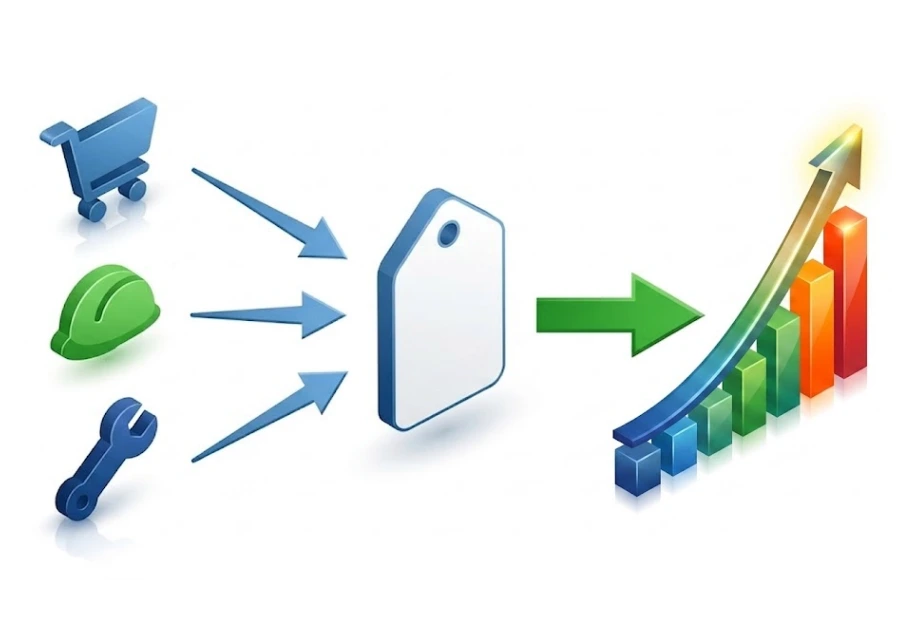
One powerful way to fine tune how you determine rental price is by using pricing structures instead of a single flat rate. Offering custom pricing tiers encourages customers to keep items longer, which means less work for your delivery and cleaning teams.
For example, instead of charging $30 every single day, you might offer:
- $30 for a single day
- $45 for a two day weekend
- $80 for an entire week
This structure automatically offers better value the longer a customer keeps the book. It also helps increase your average order value while keeping your rates fair and transparent. Customers clearly understand they are getting a deal for extended use.
Connect your pricing to your daily operations
Pricing plays a big role in how your daily operations flow. Your rates affect availability, busy periods, and how much work each new order creates for your staff.
Rental periods
You can protect your income by setting minimum rental days for certain high demand items. Short rentals require just as much cleaning and paperwork as long rentals, so short rentals may need a higher daily price to be worth your time.
High vs. low season
It makes total sense to charge slightly higher prices during your busy season when demand is high. Conversely, lowering your prices during the slow winter months can increase bookings when things get quiet.
Extras and add-ons
Instead of raising the base price of your equipment, you can charge separately for extra services. You can charge specific fees for delivery, setup, breakdown, or extra safety accessories. This approach keeps your main rental prices looking attractive while helping your business earn more for the actual labor you provide.
Start simple and learn from real customers
If you are new to the rental industry, you do not need to master complex pricing formulas right away. Aim for pricing that is good enough to get your doors open.
Use simple math to understand your costs, set a price that feels reasonable for both your business and your community, and launch. Once your items are live, pay close attention to how your customers respond. The real secret to learning how to determine rental price is simple: start small, test your numbers in the real world, and improve them over time based on actual data.
Conclusion
Setting the right rental price is not as hard as it seems. Start with simple math to find your real costs, set a fair price, and then watch how your customers respond. Adjust as you go. That’s it.
As your business grows, tracking all these numbers by hand gets tricky. PREXA365 – Rental Management Software helps you keep track of your costs and bookings in one place, so pricing decisions become easier.
Book a free demo to see how it works.


