
Glimpses from The National Heavy Equipment Show 2026 – Centralized Operations
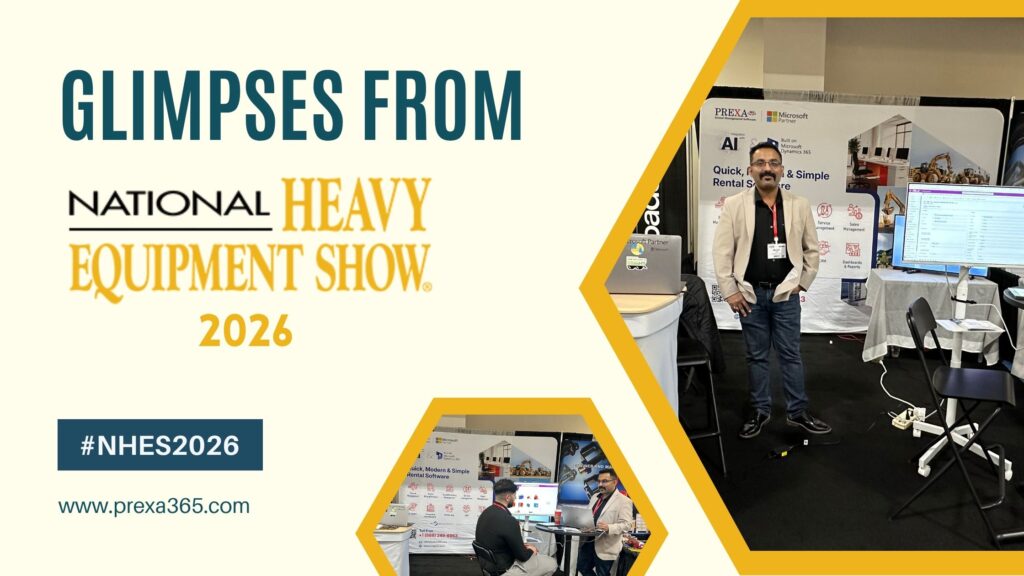
The National Heavy Equipment Show 2026 brought together professionals from across the rental and construction industry at the International Centre in Mississauga, Ontario, Canada. From business owners and operations managers to field teams working on-site every day, the event created space for real conversations around how equipment businesses are actually running today.
For the PREXA365 team, this show was less about showcasing their rental management software and more about listening. We connected with people across different roles and company sizes, and one thing became clear very quickly – many of the same operational challenges are still widely present across the industry.
What We Heard on the Ground
Across conversations at the booth and on the floor, a few themes kept coming up repeatedly. Asset visibility continues to be a major concern. Teams often struggle to track where equipment is, who is using it, and what condition it is in at any given time.
Coordination between the office and the field is another ongoing issue. Many teams still rely on calls, messages, and manual updates to stay aligned, which slows down operations and creates room for errors.
The challenges of day-to-day operational tracking also came up frequently. Whether it’s managing internal rentals, keeping records updated, or handling damage and theft prevention, most teams are still working with disconnected systems or manual processes.
The Reality of Excel and Spreadsheets
One of the most interesting takeaways from the show was how many businesses are still heavily dependent on spreadsheets. From tracking assets to managing rentals and reporting, Excel & Spreadsheets continue to play a central role in operations.
While it works to a certain extent, it also creates challenges – data duplication, lack of real-time updates, and limited visibility across teams. Many professionals we spoke to were aware of these gaps but were unsure about the next step toward a more connected system.
A Shared Industry Challenge
What stood out most was how universal these challenges are. Whether it was a small rental business or a larger operation, the core issues remained the same. Different scales, same problems.
This highlights a broader shift happening in the industry. Businesses are starting to look for ways to move beyond manual processes and bring their operations into a single system of asset management that can provide better visibility and control.
Conclusion:
As the National Heavy Equipment Show 2026 wrapped up, the biggest takeaway wasn’t just about technology – it was about clarity. The industry knows its challenges. Now, the focus is on finding practical ways to solve them.
The PREXA365 team would like to thank everyone who took the time to connect with us and share their experiences. These conversations are what shape better solutions, and we’re looking forward to continuing them.
Frequently Asked Questions
Why are so many equipment rental businesses still using Excel?
Many businesses started with spreadsheets because they are easy to use and have low cost. Over time, operations grow, but the system doesn’t. This leads to scattered data, manual updates, and limited visibility.
What are the biggest challenges in managing equipment today?
The most common issues include tracking asset location, monitoring condition, preventing theft or damage, and managing internal rentals without real-time updates.
How do companies handle coordination between office and field teams?
Most still rely on calls, WhatsApp, or emails. This often leads to delays, missed updates, and confusion due to lack of a single source of truth.
Why is real-time visibility important in rental operations?
Without real-time data, decisions are delayed. Teams may not know asset availability, job status, or service needs, which directly impacts productivity and revenue.
What problems come with using disconnected systems or manual processes?
Data gets duplicated; reports take longer, errors increase, and teams struggle to stay aligned. It also becomes difficult to scale operations efficiently.


