
Equipment Rental Software to Scale Your Business Operations
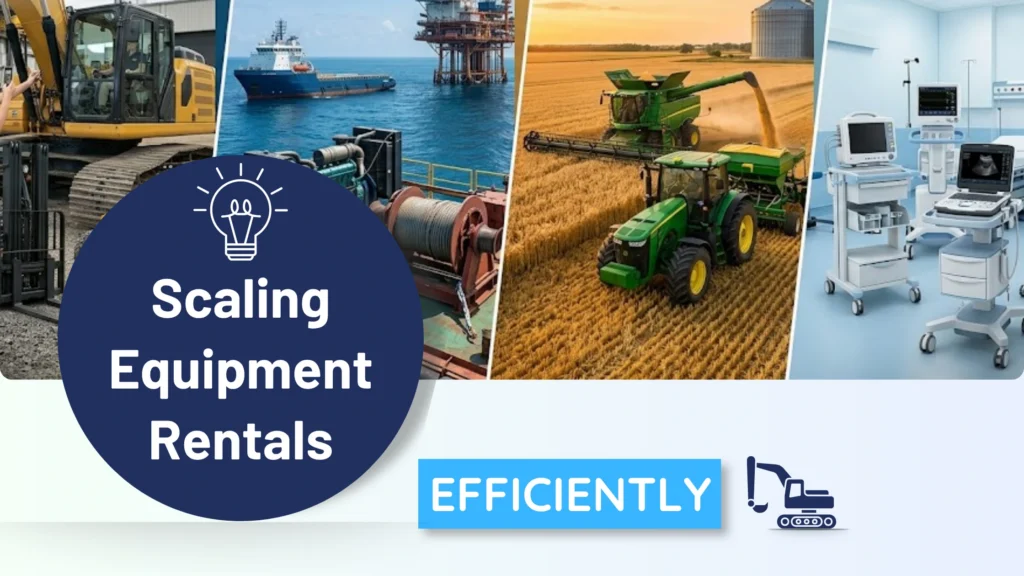
As rental operations expand, managing equipment, inventory, maintenance, scheduling, contracts, and customer requests becomes increasingly complex. What once worked for a small fleet quickly becomes difficult when equipment is spread across multiple locations, customer demand increases, and teams rely on spreadsheets or disconnected systems.
Equipment Rental Management Software helps rental businesses centralize operations and gain real-time visibility into equipment availability, maintenance schedules, reservations, inventory, inspections, invoicing, and reporting. Instead of managing information across multiple tools, teams can work from a single source of truth that supports day-to-day operations and long-term growth.
Whether you manage construction equipment, industrial machinery, tools, or specialty assets, the right equipment rental management software can improve operational efficiency, increase utilization, reduce downtime, and create a better customer experience.
This article explores the operational challenges growing rental companies face and how a modern equipment rental management system helps businesses scale while maintaining control.
Why Growing Businesses Need Equipment Rental Management Software
Growth is often viewed as a positive challenge in the rental industry. More customers, larger fleets, and increasing rental demand usually indicate that a business is moving in the right direction. However, growth also introduces operational complexity.
Many rental businesses begin with simple workflows. Customer inquiries are managed through email, reservations are recorded manually, and equipment availability is tracked using spreadsheets. While this approach may work for smaller fleets, it becomes harder to manage as operations expand.
Common challenges include:
- Limited visibility into equipment availability
- Difficulty coordinating inventory across multiple locations
- Delayed equipment quoting and reservations
- Manual maintenance scheduling
- Inconsistent customer communication
- Lack of reliable utilization reporting
As these challenges increase, businesses often evaluate rental equipment management software to help streamline operations and support sustainable growth.
How Equipment Rental Tracking Software Improves Visibility
Real-time visibility is one of the most important capabilities of modern equipment rental tracking software.
Every day, rental teams need answers to critical operational questions:
- What equipment is available?
- Which assets are currently on rent?
- What equipment has been reserved?
- Which units are due for maintenance?
- What assets are scheduled for return?
- Which categories have the highest demand?
Without instant access to accurate information, employees spend time searching for answers instead of serving customers.
An effective equipment tracking system provides real-time access to equipment status, location, reservation history, maintenance records, and utilization data. This level of visibility helps operations teams allocate equipment efficiently while giving sales teams confidence when responding to customer requests.
Many organizations strengthen collaboration through a dedicated rental management solution that centralizes reservations, equipment records, maintenance information, and customer activity into a single operational platform.
As fleets grow, real-time visibility becomes a necessity rather than a convenience.
How an Equipment Rental Management System Improves Operations
One of the most common operational issues rental companies face is inaccurate availability information.
Customers expect immediate answers regarding equipment availability, rental periods, pricing, and delivery schedules. When staff members must consult several spreadsheets or multiple departments before confirming an answer, customer confidence can quickly decrease.
A modern equipment rental management system helps solve this challenge by connecting reservations, equipment records, rental contracts, maintenance history, and inventory information.
PREXA365 supports reservation workflows that allow multiple assets to be grouped within a single rental contract. Reservations can be converted into rental orders while preserving booking information and equipment allocation history.
This helps improve:
- Equipment allocation
- Reservation tracking
- Contract management
- Rental order processing
- Customer communication
The result is a more streamlined rental process that supports both operational efficiency and customer satisfaction.
Equipment Quoting and Reservation Management
Fast and accurate equipment quoting is critical for rental businesses.
When sales teams have immediate visibility into equipment availability, pricing, and rental schedules, they can respond faster to customer inquiries. This improves customer experience while helping organizations secure more rental opportunities.
Integrated quotation, reservation, and rental workflows reduce administrative effort and eliminate duplicate data entry, creating a more efficient rental lifecycle.
Equipment Maintenance Management System Benefits for Rental Fleets
Maintenance should never be viewed as a separate business function.
For rental businesses, maintenance directly impacts revenue, customer satisfaction, and fleet availability. Equipment that is unavailable due to unexpected repairs cannot generate rental income.
According to the U.S. Department of Energy, preventive maintenance programs can reduce maintenance costs by 12% to 18%, helping organizations improve reliability and operational performance.
An effective equipment maintenance management system helps rental businesses move from reactive maintenance to a proactive strategy.
PREXA365 supports preventive maintenance through:
- Automated service scheduling
- Maintenance history tracking
- Inspection management
- Work order tracking
- Service notifications
- Meter and usage monitoring
Organizations seeking stronger maintenance processes often complement rental operations with preventive maintenance software that helps manage inspections, service schedules, maintenance records, and compliance requirements.
A proactive maintenance strategy can help organizations achieve:
- Improved equipment availability
- Reduced downtime
- Lower repair costs
- Longer asset lifespan
- Better customer experiences
This makes equipment rental and maintenance software an important investment for growing fleets.
Equipment Asset Management and Utilization Tracking
Revenue alone does not provide a complete picture of fleet performance.
Organizations also need visibility into utilization, asset performance, maintenance history, and ownership costs.
Effective equipment asset management involves monitoring the complete lifecycle of equipment from acquisition through deployment, maintenance, utilization, and eventual replacement.
For example:
| Asset Category | Revenue | Utilization | Strategic Insight |
| Aerial Lifts | High | High | Strong investment opportunity |
| Generators | Moderate | High | Consistent demand |
| Excavators | High | Moderate | Monitor growth trends |
| Specialty Equipment | Low | Low | Review fleet strategy |
Without utilization data, rental businesses may continue investing in assets that generate revenue but spend significant time sitting idle.
Strong equipment management practices help organizations make informed decisions regarding fleet expansion, replacement planning, and future investments.
This is where equipment life cycle management becomes critical for maximizing long-term asset value.
Equipment Inventory Management Software Keeps Operations Aligned
Inventory accuracy affects every department within a rental organization.
When inventory records are inaccurate:
- Reservations become unreliable
- Customer commitments are harder to fulfill
- Maintenance planning becomes less effective
- Reporting loses accuracy
- Equipment transfers become difficult to track
An integrated equipment inventory management software solution helps eliminate these issues by maintaining accurate records across branches, warehouses, and job sites.
A modern equipment inventory management system enables businesses to:
- Track equipment availability in real time
- Monitor inventory movements
- Manage location transfers
- Support maintenance planning
- Improve rental forecasting
As fleets expand across multiple locations, rental equipment inventory management becomes increasingly important.
Many organizations improve inventory control through integrated Inventory Management Software that synchronizes equipment records across reservations, returns, maintenance activities, and location transfers.
Accurate inventory information strengthens every operational process dependent on equipment data.
Why Modern Equipment Rental ERP Platforms Rely on Analytics
Reporting is no longer limited to monthly management reviews.
Today, growing rental companies require real-time insights into operational performance.
Managers need visibility into:
- Fleet utilization
- Equipment availability
- Maintenance trends
- Revenue performance
- Inventory levels
- Customer demand patterns
Modern Equipment Rental Software platforms help organizations access this information through dashboards, reports, and analytics tools.
PREXA365 provides reporting capabilities designed to help rental businesses monitor asset availability, maintenance activity, fleet utilization, and business performance. The platform also supports Power BI integration for advanced analysis and visualization.
Many organizations rely on a dedicated Rental Reporting System to identify trends, evaluate asset categories, and monitor operational performance across multiple locations.
Analytics-driven decisions often help businesses improve efficiency while reducing unnecessary operating costs.
Essential Features of the Best Equipment Rental Management Software
Not all rental solutions offer the same functionality.
Organizations evaluating the best equipment rental management software should look for capabilities that support both current requirements and future growth.
Core Features to Evaluate
✔ Asset management
✔ Rental reservations
✔ Equipment quoting
✔ Rental contracts
✔ Inspection tracking
✔ Preventive maintenance
✔ Equipment tracking
✔ Multi-location inventory visibility
✔ Customer relationship management
✔ Scheduling and dispatch
✔ Reporting and dashboards
✔ Accounting integrations
✔ Mobile accessibility
Equipment Rental Scheduling Software
Effective equipment rental scheduling software helps organizations coordinate assets across multiple projects, locations, and customers while avoiding scheduling conflicts.
Cloud Based Equipment Rental Software
Many rental organizations prefer cloud based equipment rental software because it enables teams to access information from anywhere, support multiple locations, and reduce IT infrastructure requirements.
Cloud deployments also support better collaboration and real-time data access across the organization.
Signs You Need New Equipment Rental Business Software
Many rental companies continue using outdated processes because they have worked for years.
However, growth often exposes limitations.
You may need modern equipment rental business software if:
- Staff spend excessive time locating equipment
- Reservations are managed manually
- Maintenance schedules are difficult to track
- Reporting relies heavily on spreadsheets
- Utilization data is unavailable
- Multiple systems store duplicate information
- Customer response times are increasing
- Inventory visibility is limited
If several of these issues exist simultaneously, your business may have outgrown its current systems.
Modern software for equipment rental companies helps centralize information, improve visibility, and support future growth without increasing administrative complexity.
Conclusion
Growth creates new opportunities for rental businesses, but it also introduces greater operational complexity. As fleets expand and customer expectations increase, spreadsheets and disconnected systems often become barriers to efficiency.
Modern equipment rental software provides the visibility and control needed to manage reservations, equipment tracking, maintenance, scheduling, inventory, reporting, and customer relationships from a single platform.
By investing in the right equipment rental management software, businesses can improve utilization, reduce downtime, strengthen customer relationships, and build a scalable foundation for long-term success.
Ready to see how a modern rental solution can help your business scale with confidence? Book a Free Demo and discover how smarter rental management can transform your operations.


