
12 Signs It’s Time to Upgrade Your Rental Management Software
When you’re on the road, are you still relying on a vintage printed map, or do you opt for Google Maps or modern navigation software? Just as having the right navigation tools is vital for staying competitive, adopting modern rental management platform is vital for staying competitive. While legacy systems may have served well in the past, they could be holding your business back.
Here are some clear signs that indicate it’s time to upgrade your legacy systems:
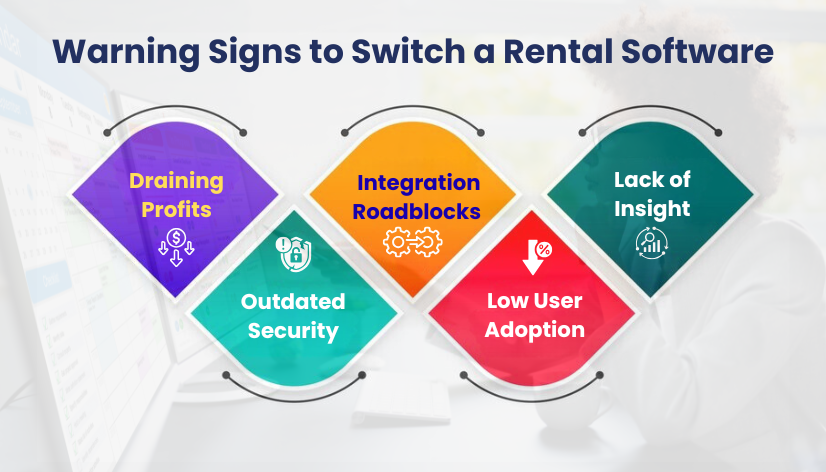
Is Your System Draining Your Profitability?
As systems age, maintenance costs typically rise, consuming a larger share of the budget. These systems also become increasingly vulnerable to security risks as they age
In rental operations, inefficiencies like delayed invoicing and manual processes add to operational costs. Upgrading to a modern software solution that is cloud-based can cut system maintenance expenses by up to 30% through improved automation and integration, enabling more cost-effective resource allocation.
Outdated Security: Are You Exposing Your Business Risks?
Legacy systems often lack regular security updates, making them vulnerable to cyberattacks. In the rental industry, this can have serious consequences.
Transitioning to the cloud can significantly enhance security and mitigate risks for businesses, including those in the rental industry. Cloud service providers frequently update their systems, including data backup and disaster recovery solutions, ensuring that rental companies can quickly recover their data in case of a cyberattack or system failure, minimizing downtime and data loss.
For example, PREXA365 software is built on Microsoft technologies that ensure high availability and resilience through the capabilities of Microsoft Azure cloud. Most Azure services aim for 99.9% to 99.99% uptime, which indicates that both planned and unplanned downtime is minimal.
Integration of Roadblocks: Is Your System Disconnected from Key Operations?
Many legacy systems struggle to connect important business functions such as customer relationship management, asset management, rental operations, and financials. Wikipedia defines system integration as linking different software applications so they operate as a coordinated whole. It also notes that integration can help reduce operational costs and improve response times.
For rental businesses, connected systems allow customer, equipment, order, maintenance, and financial information to flow between departments. This reduces duplicate data entry, supports real-time updates, and helps employees make faster and more informed decisions.
Modern rental software supports seamless integration with other software applications through APIs and enables real-time data updates. This means that changes made in one part of the system (e.g., rental reservations) are immediately reflected in other areas (e.g., asset management), improving end-to-end processes like rental reservations, asset allocations, and service orders, reducing manual workload by up to 50%.
Low User Adoption: Is Your System Frustrating Employees?
A review found that 52% of employees are disengaged by poor software interfaces, leading to longer training times and lower operational efficiency.
In contrast, modern software such as PREXA365 offers intuitive dashboards and role-based system configuration, improving user experience, and boosting productivity. It helps employees manage tasks like order processing, returns, and invoicing more efficiently, allowing them to focus on customer service.
Lack of Insight: Are You Missing Out on Data-Driven Decisions?
Legacy systems often lack the analytics needed to monitor key performance indicators (KPIs) such as financial utilization, time utilization, and asset profitability. A McKinsey study revealed that businesses using advanced analytics are 19 times more likely to achieve profitability compared to those relying on outdated systems.
Modern software solutions provide detailed, real-time analytics that offer insights into fleet performance, rental rates, and maintenance costs, helping rental businesses make data-driven decisions that enhance ROI.
Limited Scalability: Can Your System Support Future Growth?
A legacy system may work when a rental business operates from one location with a limited number of assets. Problems often appear when the company adds more equipment, employees, branches, warehouses, or service areas.
Older systems may require separate databases or manual spreadsheets for every location. This makes it difficult to maintain a single, accurate view of rental orders, customer accounts, equipment availability, and financial performance.
Modern rental management software should support business growth without forcing you to replace the entire system again. It should allow you to add users, locations, assets, and business entities while maintaining centralized control.
A scalable system can help teams transfer equipment between locations, check availability across branches, apply location-specific pricing, and compare performance from a common dashboard. This becomes especially important when dealing with the common challenges of scaling a rental business, such as managing growing inventory, additional users, and multiple locations.
Poor Equipment Visibility: Do You Know Where Every Asset Is?
Legacy systems frequently provide limited visibility into the current location and condition of rental equipment. Staff may need to call another branch, check paperwork, or search through spreadsheets before confirming whether an asset is available.
This lack of visibility can result in double bookings, delayed deliveries, unnecessary equipment purchases, and dissatisfied customers.
Modern rental management software can maintain a connected record for each asset, including its current location, rental status, service history, customer assignment, inspection details, and upcoming reservation schedule.
Real-time equipment visibility helps employees respond to customers faster and allocate equipment more efficiently. It also supports better control of stock levels, rental history, and equipment availability, which are central to effective rental inventory management.
Manual Maintenance Processes: Are Repairs Affecting Availability?
Rental equipment must remain safe, reliable, and ready for customer use. However, many legacy systems treat rental orders and maintenance as separate processes.
A piece of equipment may appear available in the rental system even though it is waiting for an inspection or repair. This disconnect can lead to scheduling conflicts, unexpected downtime, and last-minute order changes.
- Connect rental scheduling with maintenance.
- Block assets assigned to service orders.
- Schedule maintenance by date, usage, mileage, or hours.
- Track inspections, parts, labour, repairs, and downtime.
This information helps management understand whether an asset remains profitable or whether increasing maintenance costs justify replacement.
Difficult Remote Access: Can Your Team Work Outside the Office?
Rental operations take place in warehouses, customer sites, service yards, delivery vehicles, and multiple branch locations. Employees should not be dependent on one office computer to access important rental information.
Legacy systems may only work through a local server or require complicated remote-access arrangements. This can slow down employees who need to check availability, complete inspections, confirm deliveries, or update rental orders while away from the office.
- Secure browser and mobile access
- Shared records for office and field teams
- Fewer delays from disconnected systems
The decision between cloud and local deployment should be based on your accessibility, security, and infrastructure needs. Understanding the differences between cloud and on-premises rental management software can make this decision clearer.
Data Migration: What Happens to Your Existing Records?
One of the biggest concerns when replacing a legacy system is the transfer of historical data.
Rental businesses may have years of customer records, equipment details, pricing agreements, open contracts, invoices, service history, and financial transactions stored in the old platform.
A successful transition requires more than copying information into a new system. Existing data should be reviewed, cleaned, mapped, tested, and validated before go-live.
Not every record needs to be migrated. Some businesses move active and recent data into the new platform while retaining an archive of older information. The final approach should reflect legal, operational, and reporting requirements.
A structured migration plan reduces disruption and gives employees confidence that important records will remain available.
Change Management: Will Your Employees Adopt the New System?
Replacing technology does not automatically improve business performance. Employees must understand how the new system supports their daily work.
Resistance often occurs when users are introduced to new software without proper communication, training, or involvement in the selection process. Employees may continue using spreadsheets or old workarounds if they do not understand the new workflows.
Rental businesses can improve adoption by involving key users early, testing real business scenarios, and providing role-based training.
Warehouse employees may focus on barcode scanning and equipment returns, while finance users may need training on invoicing and payments. Sales employees may require support with quotations, customer information, and equipment availability.
The software selection process should also include practical questions about implementation, training, support, and long-term fit. These considerations are covered in more detail in this guide on selecting rental management platform.
Calculate the Real Cost of Keeping the Legacy System
Many businesses delay modernization because replacing the existing platform appears expensive. However, the visible cost of new software should be compared with the hidden cost of maintaining the old system.
Legacy-system costs may include manual data entry, duplicate work, custom fixes, slow order processing, delayed invoicing, weak reporting, and security exposure.
The total cost should also include the effect on customers. Slow quotations, incorrect invoices, unavailable equipment, and delayed responses can reduce customer satisfaction and future revenue.
When evaluating a modern system, compare its implementation and subscription costs with the operational savings it can create through automation, integration, faster invoicing, better asset utilization, and reduced downtime.
A modernization project should therefore be treated as a business-improvement initiative rather than only an IT expense.
Planning a Smooth Transition to Modern Rental Management Software
Moving away from a legacy platform does not have to happen all at once. A phased implementation can reduce risk and allow employees to adapt gradually.
Start by documenting the current rental process and identifying the most significant challenges. These may include double bookings, delayed invoices, disconnected maintenance records, weak reporting, or limited branch visibility.
Next, define the processes that must be available in the new system from the first day. Additional features and integrations can be introduced later where appropriate.
Before go-live, test realistic scenarios such as creating a quotation, converting it into a rental order, allocating equipment, processing a return, recording damage, generating an invoice, and scheduling maintenance.
A structured transition normally includes process discovery, configuration, data migration, integration testing, employee training, user acceptance testing, and post-launch support.
Don’t Let Legacy Hold You Back
While legacy systems offer familiarity, they may no longer meet the demands of today’s fast-moving rental industry.
Many legacy systems are built on older technologies that may become unsupported over time. Vendors might stop providing updates or patches, leading to potential compatibility issues with newer technologies.
Upgrading to a modern rental management solution can enhance security, streamline operations, and provide the insights needed for growth.
If you’re considering an upgrade, PREXA365 offers a comprehensive cloud-based solution that meets modern rental needs. With features like flexible and easy integration process, advanced power BI analytics, and user-friendly interfaces, it supports an easy transition for rental businesses looking to evolve.
Conclusion
Legacy systems may feel familiar, but familiarity should not prevent a rental business from improving its operations. When outdated software creates manual work, security concerns, disconnected information, limited reporting, and poor equipment visibility, it can restrict both productivity and growth.
Modern rental management software can bring rental orders, customers, equipment, maintenance, invoicing, and reporting into one connected platform. This gives employees faster access to accurate information and helps management make better decisions about utilization, profitability, service, and future investment.
The right modernization strategy begins with understanding your current challenges, defining clear requirements, preparing your data, and selecting a solution that can support your business as it grows.
Ready to move beyond your legacy rental system? Mail us at sales@prexa365.com or book a free demo to get started.
Frequently Asked Questions
What is a legacy system in the context of rental management?
A legacy system refers to outdated software or hardware that, while still functional, lacks the modern features required to stay competitive. In the rental industry, these systems often struggle with cloud connectivity, real-time data syncing, and modern security protocols, often becoming a “roadblock” to business growth.
How can upgrading my Rental Management Software increase profitability?
Upgrading to a modern, cloud-based solution can reduce system maintenance expenses by up to 30%. By automating manual processes – such as invoicing, asset allocation, and service orders – businesses can significantly lower operational costs and reallocate resources more effectively.
Is my data safer on a modern cloud-based system than on an old local system?
Yes. Legacy systems often lack the latest security patches, making them prime targets for cyberattacks. Modern rental management software hosted on the cloud (like PREXA365 on Microsoft Azure) provides automated data backups, disaster recovery solutions, and high availability (99.9% to 99.99% uptime) to ensure your data is protected and always accessible.
Can modern rental software integrate with my existing CRM and accounting tools?
Absolutely. Unlike disconnected legacy systems, modern software uses APIs to support seamless integration with CRM, asset management, and financial applications. According to Gartner, integrated systems can boost operational efficiency by 35% and reduce manual data entry errors by 25%.


