
Make Every Rental Opportunity Count with Rental Management Software
Opportunities in a rental business often appear in subtle ways. A new inquiry, a returning customer, or even an underused asset can all influence revenue over time. The way these moments are handled can shape both short-term results and long-term growth.
Managing rentals involves multiple moving parts. Customer inquiries, scheduling, asset tracking, maintenance, and billing all need attention. When these processes are handled across disconnected systems or manual methods, it can become difficult to maintain consistency and visibility.
Rental management solution offers a way to bring these elements together. It provides a structured approach to managing operations while giving better insight into daily activities. This can help businesses respond more effectively and make more informed decisions.
Convert Every Inquiry into Revenue
Customer interest is often the starting point of any rental opportunity. When someone reaches out or submits a request, the speed and quality of response can influence whether that inquiry turns into a confirmed booking.
Rental management systems help organize and track these interactions. Instead of relying on scattered emails or manual logs, inquiries are captured within a centralized system. This makes it easier to follow up, create quotes, and move the process forward.
Typical capabilities may include:
- Capturing lead information automatically
- Converting inquiries into opportunities
- Generating quotes linked to customer requirements
- Transitioning from quote to reservation without re-entering data
For instance, a rental quoting management system can help teams prepare quotes, apply pricing, confirm equipment availability, and move approved quotes into the rental process.
Offer Flexible Scheduling to Support Customer Needs
Rental timelines can change due to various factors such as project delays or shifting event schedules. A system that allows adjustments without complexity can make a huge difference in customer experience.
Rental management software supports flexible scheduling by allowing bookings to be modified without changing the overall contract. This can help in making important changes while maintaining clarity in the system.
Key aspects may include:
- Booking assets across different durations such as daily, weekly, or monthly
- Updating rental periods without canceling existing agreements
- Managing pickups, drop-offs, and exchanges within the same workflow
In many cases, reservations can be updated directly rather than recreated, which helps simplify both administrative work and customer communication.
This level of flexibility can contribute to a smoother experience and increase repeat business over time.
Maintain Accuracy in Inventory and Billing
Inventory visibility plays an important role in rental operations. Knowing the exact status of each asset helps prevent scheduling conflicts and supports better planning.
Rental systems provide real-time updates on asset availability. This allows businesses to track whether equipment is currently rented, reserved, under maintenance, or ready for use.
At the same time, billing processes can be aligned with inventory data. This connection helps ensure that rental invoices reflect actual usage and agreed pricing terms.
Common features often include:
- Real-time asset status tracking
- Automated invoice generation based on rental duration
- Support for multiple pricing models
- Customer-specific pricing where required
For example, different pricing can be applied to corporate clients, government entities, or retail customers within the same system.
Such alignment between inventory and billing can help reduce discrepancies and improve overall reliability.
A rental invoicing and payment system can support recurring billing, partial billing, split payments, multiple assets, additional charges, and payment-status tracking.
Rental systems can also connect with Microsoft Dynamics 365 Business Central to support accounts receivable, accounts payable, cash flow, fixed assets, and financial reporting.
Businesses considering this connection can review the official Microsoft Dynamics 365 Business Central documentation for further information about its finance and business management capabilities.
Connecting rental and financial records reduces the need to enter the same transaction into separate systems. It also gives finance and operations teams a more consistent view of each rental.
Use Data to Guide Business Decisions
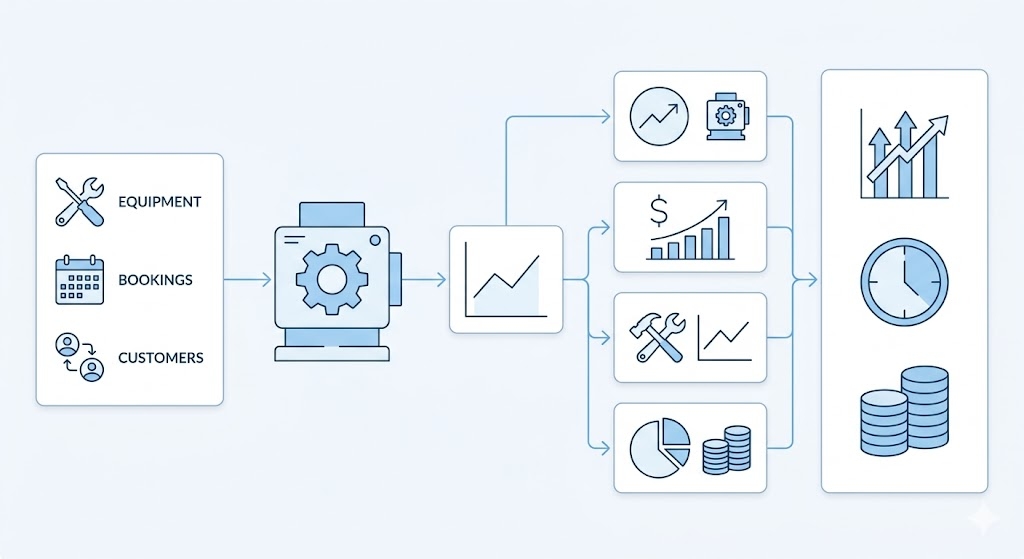
Data can offer valuable insight when it is presented in a clear and structured way. Rental management software often includes a rental reporting system that integrates with platforms like Power BI to provide visual dashboards.
These insights can help businesses understand patterns and performance across their operations.
Examples of what can be analyzed include:
- Asset utilization rates
- Revenue generated by each asset
- Maintenance frequency and cost trends
- Overall profitability
Metrics such as return on investment can also be evaluated by comparing asset cost, income, and operational expenses.
With access to this information, businesses find it easier to identify which assets contribute most to revenue and which may require attention.
Strengthen Customer Relationships Over Time
Customer relationships are often long term rather than short term. Maintaining consistent communication and understanding customer preferences can support the idea of a long-term engagement.
Rental systems help store and organize customer data, making it accessible when needed. This can include past rentals, payment history, and interaction records.
With this information, businesses can:
- Send reminders for upcoming returns
- Share relevant offers based on past activity
- Follow up after completed rentals
Integration with communication software or apps such as Outlook or marketing platforms can further support this relationship building.
Simplify Operations with Connected Processes
Managing rental operations involves several steps. When these steps are handled manually, it requires additional time and coordination.
Rental management software brings these processes into a unified system, which can help optimize the time of daily activities.
This may include:
- Creating and managing quotes efficiently
- Converting quotes into reservations without duplication
- Handling returns and exchanges within existing contracts
- Automating invoicing and documentation
Maintenance management is another important area. The system can track service schedules and notify teams when maintenance is due.
For example:
- Scheduled preventive maintenance based on usage
- Alerts for upcoming service requirements
- Maintenance history tracking for each asset
This approach helps maintain rental equipment condition and reduce unexpected downtime.
Additionally, tracking asset value through depreciation models can provide insight into current book value and future planning.
Improve Visibility Across the Business
A connected system allows different teams to access the same information, which can improve coordination and reduce misunderstandings.
Rental management software provides a centralized view of key business elements, including customers, assets, and financial data.
Cloud-based access further supports flexibility by allowing teams to work from different locations or devices.
This level of visibility can support faster decision-making and more consistent operations.
Support Growth with Better Structure
As a rental business expands, the volume of transactions and data increases. Managing this growth requires a system that can scale while maintaining clarity.
A robust system can support this by allowing businesses to:
- Add new asset categories
- Expand pricing structures
- Manage higher transaction volumes
At the same time, workflows remain consistent, which helps maintain operational stability as the business grows.
Final Thought
Running a rental business involves balancing multiple responsibilities. Each stage, from inquiry to return, contributes to overall performance.
Rental management software provides a structured way to manage these stages while offering better visibility into operations. It supports consistency, reduces manual effort, and helps businesses make more informed decisions over time.
There may already be areas within your current rental process that feel time-consuming or unclear. Exploring these shortcomings could offer useful insights into where improvements may be possible for your rental business.
To discuss your rental requirements and assess whether the platform fits your operations, book a free demo with our team of experts or call us at +1(905)917-0365.
Frequently Asked Questions
Will AI replace rental management teams?
No. The role of AI in rental management is not to replace human staff but to change how they make decisions. AI handles heavy data analysis, repetitive patterns, and manual setup work (like drafting quotes from emails), allowing staff to focus on high level tasks like complex negotiation, project planning, and exception handling.
How does AI help with fleet utilization and planning?
AI analyzes past years of rental data to identify which models generate the highest margins, which machines sit idle too often, and which assets should move between branches before peak season. This helps managers move away from “gut feeling” decisions and build simple, data-backed rules for new purchases and asset disposal.
What is the difference between traditional service scheduling and AI-driven maintenance?
Most rental companies use basic service plans based strictly on hours or dates. AI-driven predictive maintenance analyzes telematics (like operator behavior and environment conditions) along with past breakdown history to create a risk score for each unit. This allows teams to plan extra checks on high risk assets before they fail on a job site.
How can a rental business prepare for AI implementation?
Preparation does not require a massive budget. Businesses should focus first on fixing the basics of their data, such as cleaning up product master data, enforcing consistent status codes (e.g., “available” vs “under repair”), and capturing structured inspection reports. Once data is clean, the best approach is to start with one clear, measurable use case (like pricing suggestions for one product family) before expanding.


