
10 Features Every Furniture Rental Management Software Should Have
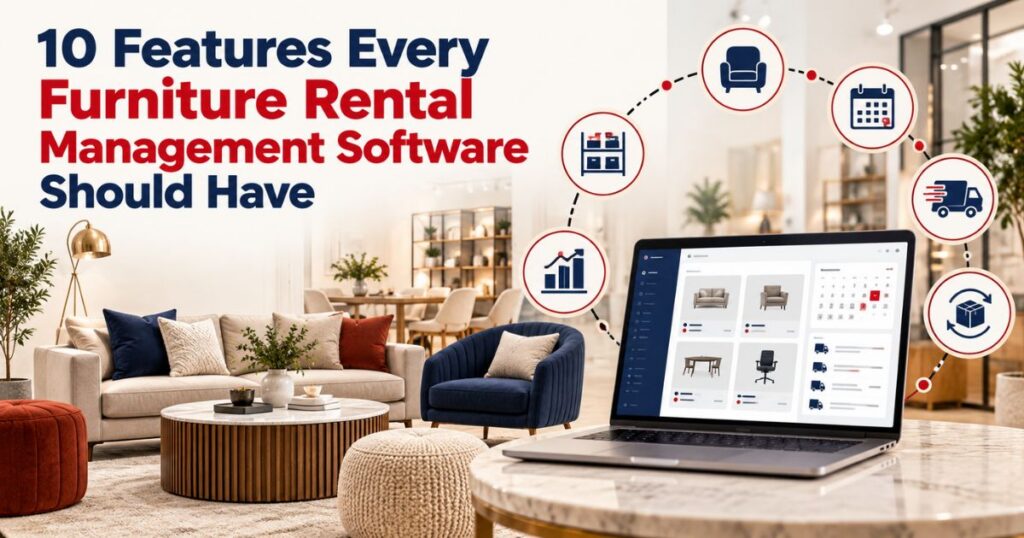
Furniture rental involves more than reserving tables, chairs, beds, sofas, and cabinets. A single order may contain several room packages, hundreds of individual items, multiple delivery stages, assembly requirements, condition records, customer extensions, and partial returns.
Furniture rental management software should connect these activities without hiding the status of individual products.
The right platform must support quantity-based inventory and individually tracked furniture, while also reflecting how items move through reservations, preparation, delivery, active rental, collection, inspection, cleaning, repair, and future availability.
The following ten features provide a practical framework for comparing furniture rental systems.
Flexible Furniture and Inventory Records
A furniture rental company may manage inventory by quantity, individual item, or both.
Standard dining chairs, folding tables, or lamps may be tracked by quantity. Higher-value desks, designer pieces, mattresses, appliances, or uniquely identifiable items may require individual records.
The system should support these different methods without forcing the company to maintain separate inventory files.
A practical inventory hierarchy may include:
- Room → Collection → Product Type → Style → Material → Colour → Individual Item
This structure should reflect how employees and customers search.
A relocation customer may look for a complete bedroom package. An office customer may search by workstation size or finish. A staging company may need items grouped by style or property type.
Each item or product group may include:
- Product name and internal code
- Dimensions and specifications
- Colour, material, and collection
- Current location
- Quantity and operational status
- Condition and rental history
A dependable furniture rental inventory management software structure reduces reliance on informal product descriptions and employee memory.
Room Packages and Configurable Furniture Kits
Furniture rentals are often sold as packages rather than isolated products.
A bedroom package may include a bed, mattress, nightstands, dresser, mirror, and lamps. An office package may include desks, chairs, storage cabinets, and meeting-room furniture.
The system should allow employees to create repeatable package templates while keeping every component visible.
This matters because package components may change independently.
One chair may require repair. A lamp may be out of stock. The customer may exchange the dining table while keeping the rest of the room package.
The furniture rental platform should update the affected component without rebuilding the entire order.
It should also check whether all required items are available for the requested dates before employees confirm the complete package.
Configurable kits provide additional flexibility. Employees may need to change quantities, finishes, dimensions, or selected components according to the customer’s property and preferences.
The package should make quotation preparation easier without hiding the inventory records beneath it.
Date-Based Furniture Availability
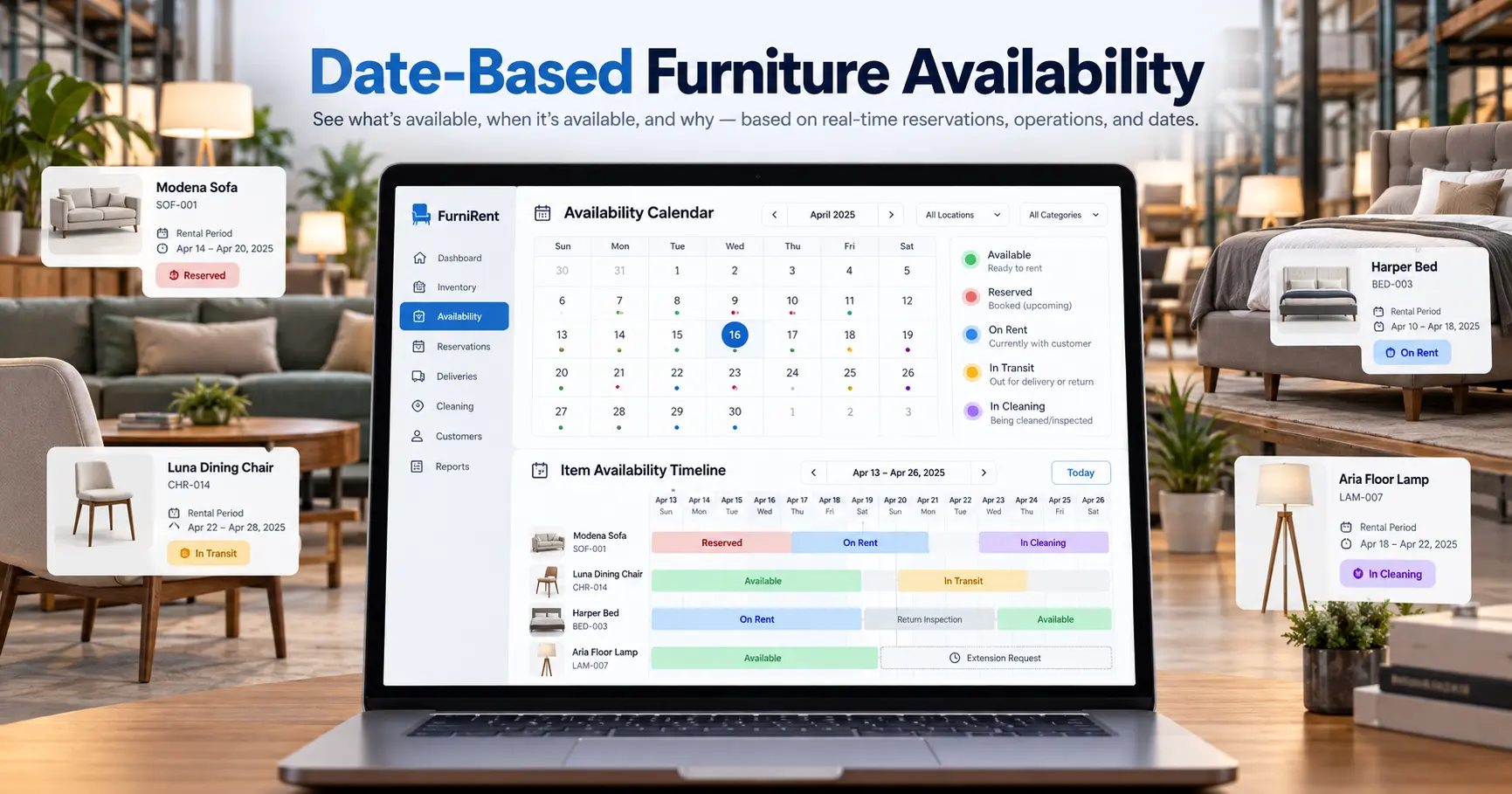
Furniture inside the warehouse is not automatically available for the next customer.
It may already be reserved, in transit, awaiting collection, undergoing inspection, scheduled for cleaning, or under repair.
The system should calculate availability for the full rental period rather than relying only on the current warehouse count.
That period may include:
- Order preparation
- Delivery and assembly
- Active rental dates
- Collection
- Return inspection
- Cleaning, repair, or refurbishment
A sofa returning on Monday may not be ready for another delivery on Monday afternoon.
Employees may need time to inspect its frame and upholstery, record its condition, clean it, complete any required work, and approve it for another rental.
Customer extensions also need another availability review.
If a corporate-housing customer keeps a furniture package for an additional month, the change may affect another reservation, planned collection, or delivery route.
Suitable furniture rental software should make that conflict visible before the extension is approved.
Quotation and Customer Agreement Management
Furniture quotations may involve products, packages, rental periods, delivery, assembly, collection, recurring charges, deposits, replacement terms, and optional services.
The quotation should keep these details connected with the customer requirement.
Employees may need to prepare several versions before the customer confirms the final package.
The system should preserve:
- Furniture and quantities quoted
- Rental start and end dates
- Customer-specific prices
- Delivery and collection charges
- Assembly requirements
- Deposits or approved fees
- Revision history
- Acceptance status
Once accepted, the approved information should move into the rental order without being entered again.
Customer-specific pricing also needs control.
Corporate accounts, relocation companies, property managers, staging businesses, and repeat customers may have different rates or service arrangements.
A connected customer relationship management process can help associate enquiries, quotations, contacts, addresses, projects, communications, and rental history with the correct customer account.
Delivery, Assembly, and Collection Scheduling
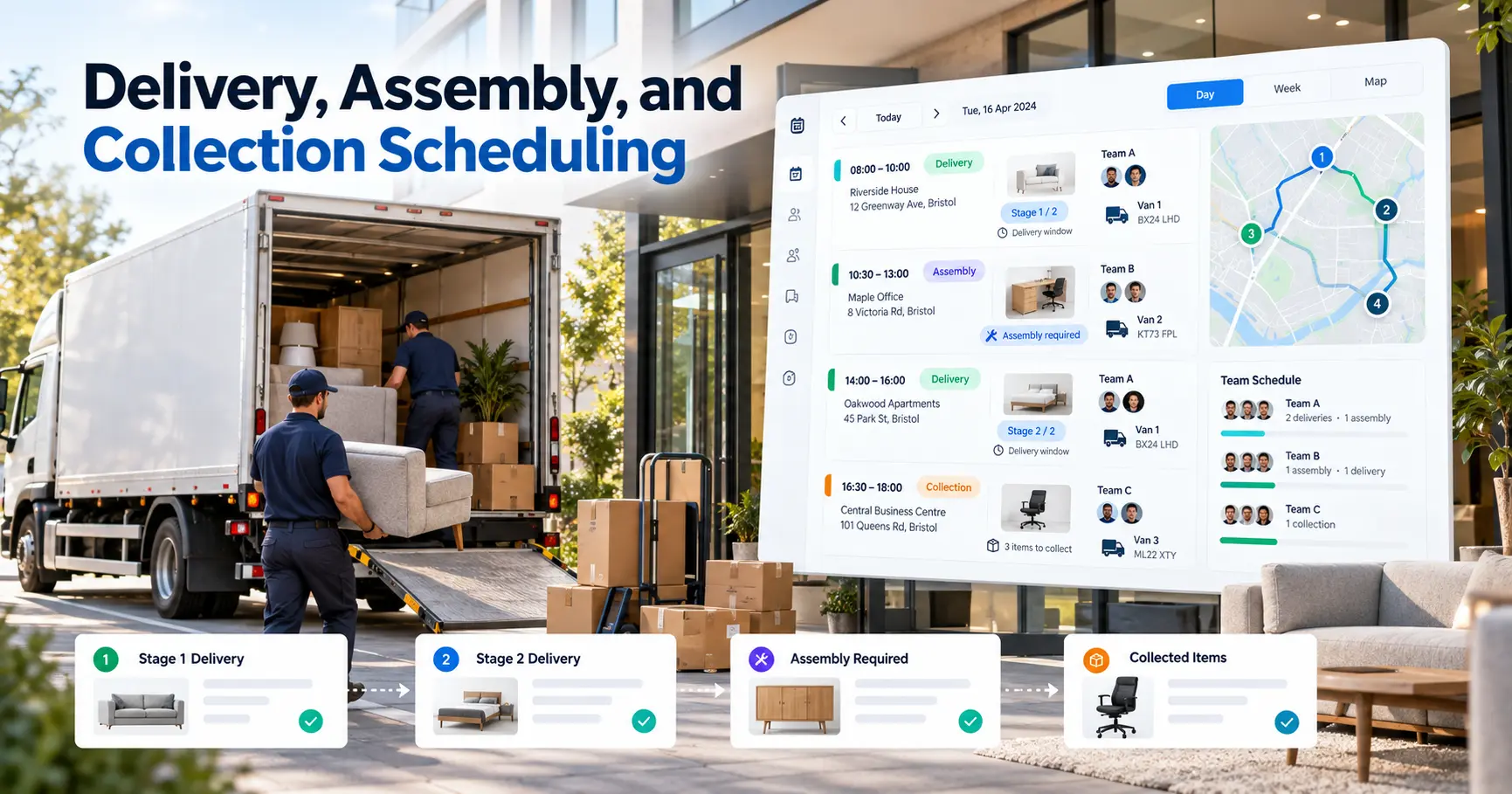
Furniture rental logistics can involve several employees, vehicles, locations, and delivery stages.
The delivery record may need to include:
- Customer and property address
- Building or site contact
- Delivery window
- Vehicle and team
- Access, lift, or loading instructions
- Furniture and quantities
- Assembly requirements
- Supporting notes
Furniture may also be delivered in stages.
An office customer may receive desks before meeting-room furniture. A relocation customer may request a partial delivery while waiting for access to another room.
The system should keep each movement associated with the same customer order while preserving which items were delivered and when.
Collection requires the same level of control.
Some furniture may be collected while the remaining items stay with the customer. The system should close only the collected lines and continue the active rental correctly.
An effective office furniture rental software process should also account for larger commercial deliveries, floor plans, phased installations, building access, and removal schedules where relevant.
Condition Records and Photographs
Furniture condition can affect customer communication, maintenance decisions, replacement costs, and future availability.
A pre-rental record may document existing marks, upholstery condition, finish, accessories, photographs, and packaging.
A return inspection may identify:
- New damage
- Stains or cleaning needs
- Missing hardware
- Loose joints
- Upholstery concerns
- Assembly issues
- Required repair or refurbishment
Condition notes should remain specific.
“Table damaged” provides limited guidance. “Scratch across the right side of the tabletop and loose rear-leg fitting” gives the repair team a clearer starting point.
Photographs should remain associated with the correct item and rental transaction.
If furniture fails the return inspection, its status should prevent another booking until the required cleaning, assessment, repair, or approval is complete.
The system supports documentation. Authorised employees remain responsible for assessing condition and determining the appropriate next step.
Cleaning, Repair, and Refurbishment Workflows
Returned furniture may require different types of work before another rental.
One item may need routine cleaning. Another may require upholstery work, component replacement, refinishing, or technical assessment.
The system should distinguish between these activities rather than placing all unavailable furniture under a general “maintenance” status.
Useful stages may include:
- Awaiting Inspection → Cleaning Required → Repair Required → Work in Progress → Approval Pending → Available
Each work record may include the item, finding, assigned employee or provider, activity completed, components used, cost, completion date, and approval.
A connected service-management process can help maintain service requests, activity records, technician or provider responsibility, notes, and asset history.
Repair and refurbishment data also support wider inventory decisions.
If a product line repeatedly requires work, managers may need to review its materials, rental conditions, supplier, cleaning process, handling, or continued suitability.
Furniture reuse and responsible retirement deserve attention as well. The U.S. Environmental Protection Agency reported that 57.1 million tons of durable goods entered the U.S. municipal solid-waste stream in 2018. The category includes furniture and furnishings alongside appliances, carpets, tyres, batteries, electronics, and other durable goods, so it should not be interpreted as furniture-rental waste specifically.
The broader figure provides context for keeping repair, refurbishment, reuse, resale, and disposal records throughout an item’s lifecycle.
Extensions, Exchanges, and Partial Returns
Furniture rentals frequently change after the original order is confirmed. A customer may extend the full package, return one room early, exchange a damaged item, add another desk, or move the rental to a different address.
The system should process these changes without rebuilding the order. During an exchange, the original and replacement items need separate histories.
The first item should retain its collection date, condition record, reported issue, and next status. The replacement should receive its own delivery, condition, and rental history. Partial returns require line-level control.
If a customer returns the living-room furniture but keeps the bedroom package, only the returned lines should stop according to the agreed billing process.
These changes should also update inventory availability, delivery schedules, inspections, and recurring invoices.
An effective home furniture rental software process should preserve the customer’s complete agreement while allowing individual items or packages to change independently.
Recurring Billing and Payment Visibility
Furniture rentals may continue for several months or longer.
The billing process may therefore need to support weekly, monthly, or another agreed recurring schedule. Charges may include furniture rental, delivery, collection, assembly, approved cleaning, extensions, replacement items, or other agreed services.
The invoice should reflect what occurred during the rental, not only the original quotation. Customer extensions, exchanges, early collections, and partial returns may change the amount.
A connected rental accounting process can help associate approved rental activity with customer invoices, payments, credits, and financial records.
The business should define which platform owns invoices, payment status, taxes, deposits, customer balances, and accounting entries. Automation should not add disputed or unapproved charges without review.
Employees should be able to trace each amount back to the relevant furniture, service, rental period, or approved change.
Inventory and Performance Reporting
Furniture rental reports should help managers investigate inventory rather than display isolated totals.
Useful measures may include:
- Items available, reserved, on rent, or restricted
- Rental days and utilization
- Revenue by product, collection, or package
- Delivery and collection activity
- Cleaning and repair frequency
- Inspection backlogs
- Missing-item patterns
- Inventory by location
- Product age and condition
These measures need context.
A low-utilization sofa may be at the wrong location, part of an outdated collection, undergoing repeated repair, or missing complementary pieces. A heavily rented chair may produce strong revenue but require frequent refurbishment or replacement.
Managers should be able to open the items and transactions behind each report. A reliable furniture rental business software process should provide evidence for purchasing, transfer, repair, refurbishment, pricing, and retirement reviews without making those decisions automatically.
Additional Considerations for Multi-Location Furniture Rentals
Furniture may move between warehouses, showrooms, staging teams, customer properties, cleaning facilities, and external repair providers.
The system should preserve these movements rather than changing only the current-location field.
A branch transfer may progress through requested, approved, prepared, dispatched, received, inspected, and available.
The receiving location should not count the furniture as rent-ready before confirming the arrival, quantity, and condition.
Multi-location businesses may also need different delivery zones, pricing, taxes, customer contracts, or inventory ownership rules.
Ask the provider to demonstrate how the system separates local inventory while still giving authorised employees company-wide visibility.
What to Test During a Software Demonstration
Ask each provider to process a realistic furniture rental rather than showing separate feature screens.
Create a quotation containing a living-room package, bedroom package, quantity-based accessories, and individually tracked furniture.
Then add:
- A partial delivery
- One unavailable package component
- A customer extension
- A damaged item exchange
- A partial return
- Cleaning or repair work
- A recurring invoice
- A branch transfer
- A product-performance report
Check whether the platform preserves the history of each item while keeping the full customer order connected.
Also test a failed process, such as scanning the wrong item or attempting to reserve furniture still awaiting cleaning.
Confirm which functions are standard, configurable, integration-based, or custom.
Conclusion
The best furniture rental management software should support the complete furniture journey from quotation and reservation to delivery, return, inspection, cleaning, repair, recurring billing, and future availability.
It should maintain packages without hiding individual components and support both serialized and quantity-based inventory.
Before selecting a system, define how furniture is grouped, delivered, inspected, cleaned, repaired, exchanged, and billed in your business.
Then ask each provider to demonstrate those processes using realistic furniture packages, customer changes, and delivery scenarios.
Ready to assess PREXA365 against your furniture rental workflow? Book a free demo using packages, deliveries, inspections, exchanges, and billing scenarios from your operation, or email sales@prexa365.com to discuss furniture inventory, customer orders, logistics, and reporting requirements.


